# WFC 418 - Electrical Particle Generator

# Cover Page

<div class="flex-shrink-0 flex flex-col relative items-end" id="bkmrk-"><div><div class="pt-0"><div class="gizmo-bot-avatar flex h-8 w-8 items-center justify-center overflow-hidden rounded-full">  
</div></div></div></div>[![image-1729969270356.png](https://stanslegacy.com/uploads/images/gallery/2024-10/scaled-1680-/YyOQkUpnVIJiYNDT-image-1729969270356.png)](https://stanslegacy.com/uploads/images/gallery/2024-10/YyOQkUpnVIJiYNDT-image-1729969270356.png)

<div class="group/conversation-turn relative flex w-full min-w-0 flex-col agent-turn" id="bkmrk-water-fuel-cell"><div class="group/conversation-turn relative flex w-full min-w-0 flex-col agent-turn"><div class="flex-col gap-1 md:gap-3"><div class="flex max-w-full flex-col flex-grow"><div class="min-h-8 text-message flex w-full flex-col items-end gap-2 whitespace-normal break-words [.text-message+&]:mt-5" data-message-author-role="assistant" data-message-id="c49e74af-b12f-491c-80c7-b3715cf70e92" data-message-model-slug="gpt-4o" dir="auto"><div class="flex w-full flex-col gap-1 empty:hidden first:pt-[3px]"><div class="markdown prose w-full break-words dark:prose-invert dark align-center">**Water Fuel Cell**</div></div></div></div></div></div></div>**Electrical Particle Generator**

**How To Use Magnetized Gas To Produce Electrical Energy**  
**On Demand**

> Water Fuel Cell  
> (Job 38:22-23)  
> Jesus Christ is Lord
> 
> **Inventor:**  
> **Stanley A. Meyer**  
> 3792 Broadway  
> Grove City, Ohio 43123  
> 1-614-871-4173

# Electrical Particle Generator

<div class="flex-shrink-0 flex flex-col relative items-end" id="bkmrk-"><div><div class="pt-0"><div class="gizmo-bot-avatar flex h-8 w-8 items-center justify-center overflow-hidden rounded-full">  
</div></div></div></div><div class="group/conversation-turn relative flex w-full min-w-0 flex-col agent-turn" id="bkmrk-water-fuel-cell"><div class="group/conversation-turn relative flex w-full min-w-0 flex-col agent-turn"><div class="flex-col gap-1 md:gap-3"><div class="flex max-w-full flex-col flex-grow"><div class="min-h-8 text-message flex w-full flex-col items-end gap-2 whitespace-normal break-words [.text-message+&]:mt-5" data-message-author-role="assistant" data-message-id="88f87653-dada-43b5-8d35-dd4082a69413" data-message-model-slug="gpt-4o" dir="auto"><div class="flex w-full flex-col gap-1 empty:hidden first:pt-[3px]"><div class="markdown prose w-full break-words dark:prose-invert dark">**WATER FUEL CELL**  
</div></div></div></div></div></div></div>**Electrical Particle Generator**

The **Electrical Particle Generator** capitalizes on and uses a **Magnetized Gas** to produce **Electrical Energy**.

<p class="callout info">Manufacturing the Magnetized Gas required the development and process of taking inert gas atoms and forming a "Stable" Gas-Lattice by way of voltage stimulation called **"The Gas Bonding Process."**</p>

The **"Newly" structured and formed Gas-Lattice** is exposed to **Laser Energy**, which is pulsed to produce a **Magnetic Pulse-Wave** that traverses pickup windings to generate electricity.

<p class="callout success">The **Gas Bonding Process** is systematically activated and performed in the following way.</p>

# RE: Electrical Particle Generator

**Data Reference:** WFC Tech-Brief

**Method:** How to manufacture, stimulate, and use magnetized gas to produce electrical energy on demand.

**[![image-1729909060083.png](https://stanslegacy.com/uploads/images/gallery/2024-10/scaled-1680-/KHbfbIn48c46IpBu-image-1729909060083.png)](https://stanslegacy.com/uploads/images/gallery/2024-10/KHbfbIn48c46IpBu-image-1729909060083.png)Operational Parameters**
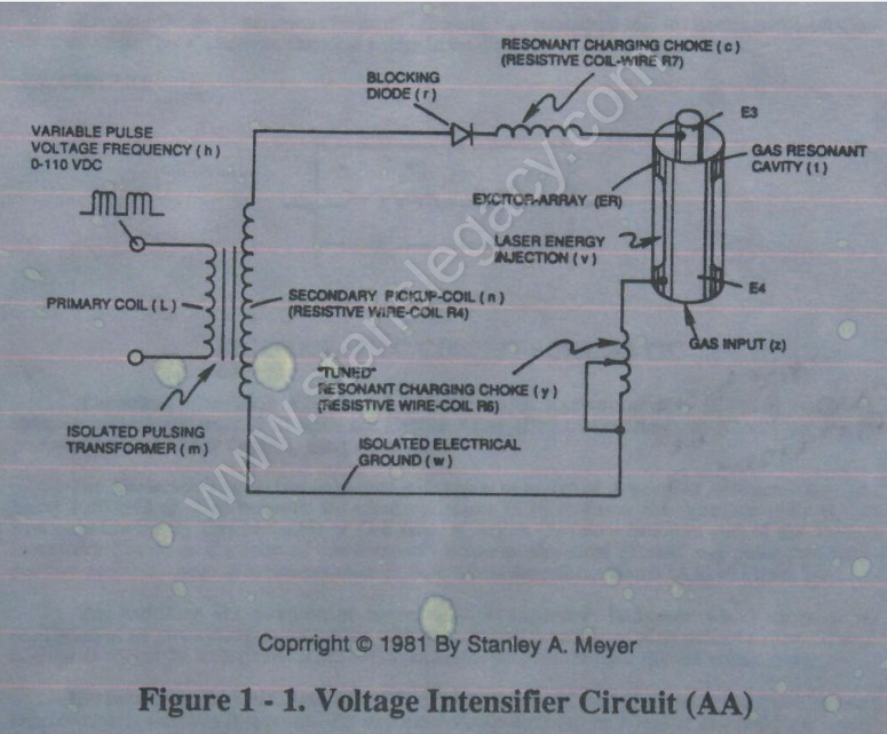
- **Primary Coil (L)**
- **Variable Pulse Voltage Frequency (h)** D-110 VDC
- **Isolated Pulsing Transformer (m)**
- **Blocking Diode (f)**
- **Resonant Charging Choke (c)** (Resistive Coil-Wire R7)
- **Excitor-Array (ER)**
- **Secondary Pickup-Coil (n)** (Resistive Wire-Coil R4)
- **"Tuned" Resonant Charging Choke (y)** (Resistive Wire-Coil R6)
- **Isolated Electrical Ground (w)**
- **Laser Energy Injection (v)**
- **Gas Resonant Cavity (t)**
- **Gas Input (z)**

# CIRCUIT COMPONENT INTERACTION

##### **PULSING TRANSFORMER**

The **pulsing transformer** (m) steps up voltage amplitude or voltage potential during pulsing operations.

The primary coil is electrically isolated (*no electrical connection between primary and secondary coil*) to form **Voltage Intensifier Circuit** (AA).

<p class="callout success">Voltage amplitude or voltage potential is increased when **secondary coil** (n) is wrapped with more turns of wire.</p>

**Isolated electrical ground** (w) prevents electron flow from input circuit ground.

##### **BLOCKING DIODE**

**Blocking Diode** (f) prevents electrical “shorting” to **secondary coil** (n) during pulse-off time since the diode “only” conducts electrical energy in the direction of the schematic arrow.

---

**LC CIRCUIT**  
[![image-1729909194850.png](https://stanslegacy.com/uploads/images/gallery/2024-10/scaled-1680-/bz2ed0WefL8PK2ax-image-1729909194850.png)](https://stanslegacy.com/uploads/images/gallery/2024-10/bz2ed0WefL8PK2ax-image-1729909194850.png)**Figure 1-2. LC Circuit Schematic**
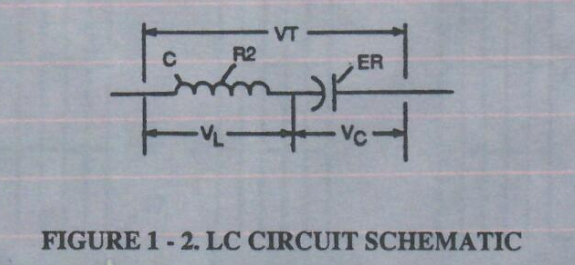
<p class="callout info">**Resonant Charging Choke** (c) in series with **Excitor-array** (E3/E4) forms an **inductor-capacitor circuit** (LC) since the **Excitor-Array** (ER) of **Gas Resonant Cavity** (t) acts or performs as a capacitor during pulsing operations.</p>

[![image-1729909060083.png](https://stanslegacy.com/uploads/images/gallery/2024-10/scaled-1680-/KHbfbIn48c46IpBu-image-1729909060083.png)](https://stanslegacy.com/uploads/images/gallery/2024-10/KHbfbIn48c46IpBu-image-1729909060083.png)The **Dielectric Properties** (*insulator to the flow of amps*) of **Argon Gas** (*dielectric constant being 1.000545 @ 23°C*) between the **electrical plates** (E3/E4) forms the **capacitor** (ER) of **Gas Resonant Cavity** (t).

Gas Molecule or Gas atom of **Argon** (Ar) now becomes part of the Voltage Intensifier Circuit in the form of “resistance” between electrical ground and pulse-frequency positive-potential... helping to prevent electron flow within the **pulsing circuit** (AA) of Figure 1-1.

The **Inductor** (c) takes on-or becomes a **Modulator Inductor** which steps up an oscillation of an given charging frequency when the effective capacitance of an pulse-forming network in order to charge the **voltage zones** (E3/E4) to an higher potential beyond applied voltage input.

The **Inductance** (c) and **Capacitance** (ER of t) properties of the LC circuit is therefore “tuned” to resonate at a certain frequency.

<p class="callout info">The Resonant frequency can be raised or lowered by changing the inductance and/or the capacitance values.</p>

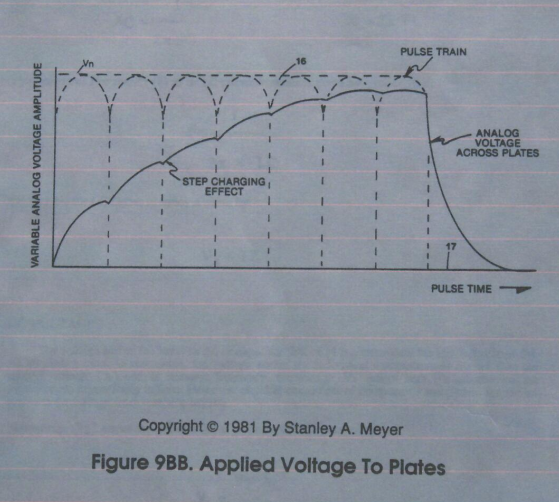
The established resonant frequency is, of course, independent of voltage amplitude, as illustrated in Figure 9BB.

<p class="callout success">The value of the **Inductor** (c), the value of the **capacitor** (ER of t), and the pulse-frequency of the voltage being applied across the LC circuit <span style="text-decoration: underline;">determines the impedance</span> of the LC circuit.</p>

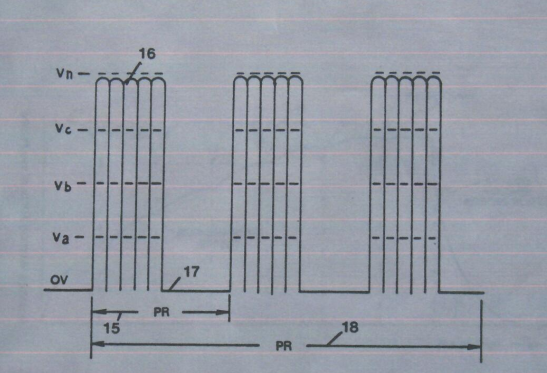
# Figure 9B & 9BB - Applied Voltage To Plates

<table border="1" id="bkmrk-" style="border-collapse: collapse; width: 100%;"><tbody><tr><td style="width: 56.7361%;">[![image-1729955474738.png](https://stanslegacy.com/uploads/images/gallery/2024-10/scaled-1680-/jnFTXU8GBiPIjwpf-image-1729955474738.png)](https://stanslegacy.com/uploads/images/gallery/2024-10/jnFTXU8GBiPIjwpf-image-1729955474738.png)

</td><td style="width: 43.2639%;">[![image-1729968940702.png](https://stanslegacy.com/uploads/images/gallery/2024-10/scaled-1680-/AYv8oCemmsC886cv-image-1729968940702.png)](https://stanslegacy.com/uploads/images/gallery/2024-10/AYv8oCemmsC886cv-image-1729968940702.png)</td></tr></tbody></table>

<p class="callout info">"Figure 9B. Variable Amplitude unipolar-pulse voltage frequency superimposed onto a 50% duty-cycle pulse-train."</p>

# LC VOLTAGE

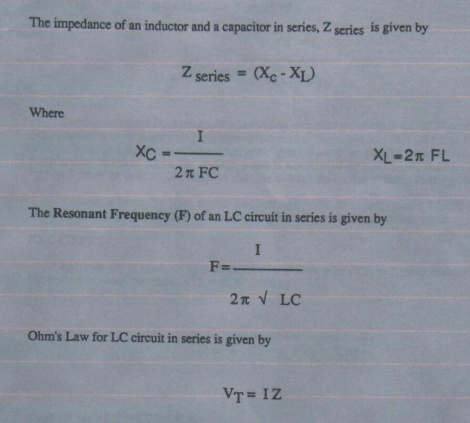
<p class="callout info">The impedance of an inductor and a capacitor in series, <span class="katex">**<span class="katex-mathml">Z<sub>series</sub></span>**<span aria-hidden="true" class="katex-html"><span class="base"><span class="mord"><span class="msupsub"><span class="vlist-t vlist-t2"><span class="vlist-r"><span class="vlist-s">​</span></span></span></span></span></span></span></span>, is given by</p>

[![image-1729955826232.png](https://stanslegacy.com/uploads/images/gallery/2024-10/scaled-1680-/e2oPL6lIsE05xsc8-image-1729955826232.png)](https://stanslegacy.com/uploads/images/gallery/2024-10/e2oPL6lIsE05xsc8-image-1729955826232.png)

> <span class="katex-display"><span class="katex"><span class="katex-mathml">Z<sub>series</sub> = (Xc−Xl)</span></span></span>

Where

> <span class="katex-display"><span class="katex"><span class="katex-mathml">Xc = 1 / 2(pi)FC</span></span></span>

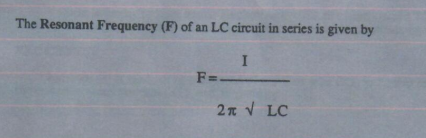
The **Resonant Frequency (F)** of an LC circuit in series is given by

[![image-1729955988059.png](https://stanslegacy.com/uploads/images/gallery/2024-10/scaled-1680-/JBb9dYTJNfm7zqbn-image-1729955988059.png)](https://stanslegacy.com/uploads/images/gallery/2024-10/JBb9dYTJNfm7zqbn-image-1729955988059.png)
**Ohm’s Law** for an LC circuit in series is given by

> <span class="katex-display"><span class="katex"><span class="katex-mathml">V<sub>t</sub> = IZ</span></span></span>

### LC VOLTAGE

[![image-1729909194850.png](https://stanslegacy.com/uploads/images/gallery/2024-10/scaled-1680-/bz2ed0WefL8PK2ax-image-1729909194850.png)](https://stanslegacy.com/uploads/images/gallery/2024-10/bz2ed0WefL8PK2ax-image-1729909194850.png)The voltage across the **inductor** (c) <span style="text-decoration: underline;">or</span> **capacitor** (*ER of t*) is <span style="text-decoration: underline;">greater than</span> the **applied voltage** (h).

<p class="callout success">At frequency <span style="text-decoration: underline;">close to resonance</span>, the voltage across the individual components is higher than the **applied voltage** (h), and, at resonant frequency, <span style="text-decoration: underline;">the voltage <span class="katex"><span class="katex-mathml">VT</span><span aria-hidden="true" class="katex-html"><span class="base"><span class="mord"><span class="msupsub"><span class="vlist-t vlist-t2"><span class="vlist-r"><span class="vlist-s">​</span></span></span></span></span></span></span></span> across both the inductor and the capacitor are theoretically infinite</span>.</p>

<p class="callout warning">However, physical constraints of components and circuit interaction prevent the voltage from reaching infinity.</p>

The **voltage** (<span class="katex"><span class="katex-mathml">V<sub>L</sub></span><span aria-hidden="true" class="katex-html"><span class="base"><span class="mord"><span class="msupsub"><span class="vlist-t vlist-t2"><span class="vlist-r"><span class="vlist-s">​</span></span></span></span></span></span></span></span>) across the **inductor** (C) is given by the equation:

<span class="katex-display"><span class="katex"><span aria-hidden="true" class="katex-html"><span class="base"><span class="mord"><span class="mfrac"><span class="vlist-t vlist-t2"><span class="vlist-r"><span class="vlist"><span class="msupsub"><span class="vlist-s">​</span></span></span><span class="vlist-s">​[![image-1729955839529.png](https://stanslegacy.com/uploads/images/gallery/2024-10/scaled-1680-/9BnePcClfpCv9QQf-image-1729955839529.png)](https://stanslegacy.com/uploads/images/gallery/2024-10/9BnePcClfpCv9QQf-image-1729955839529.png)</span></span></span></span></span></span></span></span></span>

# RLC CIRCUIT

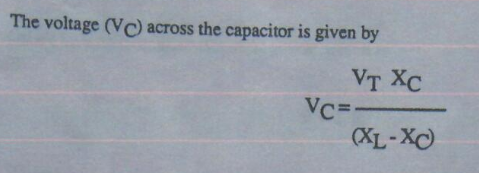
The **voltage** (<span class="katex"><span class="katex-mathml">V<sub>C</sub></span><span aria-hidden="true" class="katex-html"><span class="base"><span class="mord"><span class="msupsub"><span class="vlist-t vlist-t2"><span class="vlist-r"><span class="vlist-s">​</span></span></span></span></span></span></span></span>) across the capacitor is given by:

[![image-1729956608556.png](https://stanslegacy.com/uploads/images/gallery/2024-10/scaled-1680-/cO76K1Io59yaGKdl-image-1729956608556.png)](https://stanslegacy.com/uploads/images/gallery/2024-10/cO76K1Io59yaGKdl-image-1729956608556.png)

During resonant interaction, the incoming **unipolar pulse-train** (h) of Figure (1-1) as to Figure (9B) produces an step-charging voltage-effect across **Excitor-Array** (ER of t), as illustrated in Figure progressive function.

<table border="1" id="bkmrk-figure-9b" style="border-collapse: collapse; width: 100%;"><tbody><tr><td class="align-center" style="width: 45.9821%;">![image-1729909060083.png](https://stanslegacy.com/uploads/images/gallery/2024-10/scaled-1680-/KHbfbIn48c46IpBu-image-1729909060083.png)Figure 1-1</td><td style="width: 54.0179%;">[![image-1729955474738.png](https://stanslegacy.com/uploads/images/gallery/2024-10/scaled-1680-/jnFTXU8GBiPIjwpf-image-1729955474738.png)](https://stanslegacy.com/uploads/images/gallery/2024-10/jnFTXU8GBiPIjwpf-image-1729955474738.png)

Figure 9B

</td></tr></tbody></table>

Once the voltage-pulse is terminated or shut-off, voltage potential returns to an "ground-state" or near ground-state to start the voltage deflection process over again.

<p class="callout danger">Voltage intensity or level across **Excitor-Array** (*ER of t*) can exceed 20,000 volts due to **circuit** (AA) interaction and is <span style="text-decoration: underline;">directly related</span> to **pulse-train** (h) variable amplitude input.</p>

#### RLC CIRCUIT

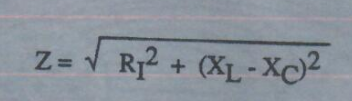
**Inductor (c)** is made of or composed of **resistive wire** (R7) to further restrict D.C. current flow beyond **inductance reaction** (XL), and is given by

[![image-1729957184564.png](https://stanslegacy.com/uploads/images/gallery/2024-10/scaled-1680-/tMbmcRV4nVm5Pmqf-image-1729957184564.png)](https://stanslegacy.com/uploads/images/gallery/2024-10/tMbmcRV4nVm5Pmqf-image-1729957184564.png)
#### Dual-inline RLC NETWORK

Variable **inductor-coil** (y), similar to **inductor** (c) connected to **opposite polarity voltage zone** (E4) further inhibits electron movement or deflection within the Voltage Intensifier Circuit.

<p class="callout info">Moveable wiper arm fine “tunes” "**Resonant Action"** during pulsing operations.</p>

**Inductor** (y) in relationship to **inductor** (c) electrically balances the opposite voltage electrical potential across voltage zones (E3/E4).

#### VIC RESISTANCE

Since **pickup coil** (n) is also composed of or made of **resistive wire-coil** (R4), then, total circuit resistance is given by

[![image-1729957065211.png](https://stanslegacy.com/uploads/images/gallery/2024-10/scaled-1680-/0VNxGIFmANBN7u7A-image-1729957065211.png)](https://stanslegacy.com/uploads/images/gallery/2024-10/0VNxGIFmANBN7u7A-image-1729957065211.png)
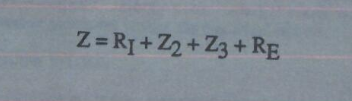
Where, <span class="katex"><span class="katex-mathml">R<sub>E</sub></span><span aria-hidden="true" class="katex-html"><span class="base"><span class="mord"><span class="msupsub"><span class="vlist-t vlist-t2"><span class="vlist-r"><span class="vlist-s">​</span></span></span></span></span></span></span></span> is the dielectric constant of **Argon** (Ar).

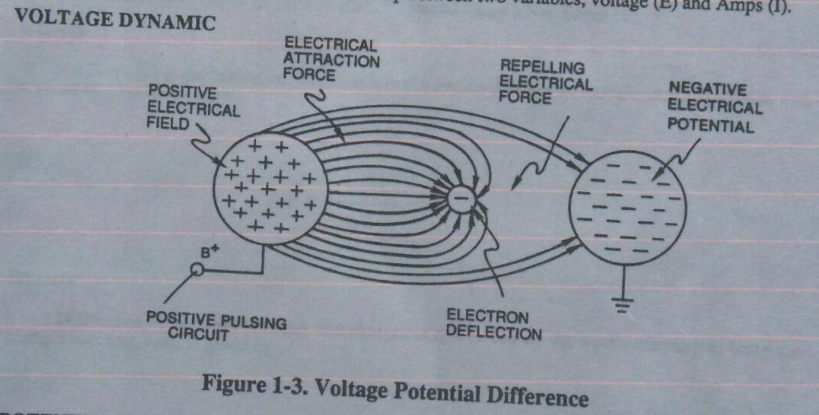
# VOLTAGE DYNAMIC

<p class="callout info">**Electrical power** (P) is a linear relationship between two variables, **voltage** (E) and **Amps** (I).</p>

#### [![image-1729957262428.png](https://stanslegacy.com/uploads/images/gallery/2024-10/scaled-1680-/BBmcT02kH4T3CRqR-image-1729957262428.png)](https://stanslegacy.com/uploads/images/gallery/2024-10/BBmcT02kH4T3CRqR-image-1729957262428.png)VOLTAGE DYNAMIC

- **Positive Electrical Field**
- **Electrical Attraction Force**
- **Electron Deflection**
- **Repelling Electrical Force**
- **Negative Electrical Potential**
- **Positive Pulsing Circuit**

**Figure 1-3. Voltage Potential Difference**

---

#### POTENTIAL ENERGY

Voltage is “**electrical pressure**” or “**electrical force**” within an electrical circuit and is known as “**voltage potential**.”

The higher the voltage potential, the greater the **force** or **electrical repelling force** is applied to the electrical circuit.

Voltage potential is an **unaltered** or **unchanged** energy-state when “**electron movement**” or “**electron deflection**” is prevented <span style="text-decoration: underline;">or restricted</span> within the electrical circuit.

# Voltage Performs Work

Unlike voltage charges within an electrical circuit set up an “electrical attraction force”; in both cases, electrical charges within the same electrical circuit generates an **repelling action**.

Electrical **forces** are known as “voltage fields” and can exhibit either a positive or negative electrical charge.

Likewise, Ions or Particles within the electrical circuit having unlike electrical charges are attracted to each other. Ions or particles mass having the same or like electrical charges will move away from one another, as illustrated in Figure 1-3.

> Furthermore, electrical charged ions or particles can move toward stationary voltage fields of opposite polarity, and, is given by Newton's second law

[![image-1729957507236.png](https://stanslegacy.com/uploads/images/gallery/2024-10/scaled-1680-/rfu0roxmFm5kA9nb-image-1729957507236.png)](https://stanslegacy.com/uploads/images/gallery/2024-10/rfu0roxmFm5kA9nb-image-1729957507236.png)
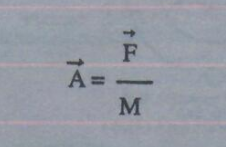
<span class="katex-display"><span class="katex"><span aria-hidden="true" class="katex-html"><span class="base"><span class="mord"><span class="mfrac"><span class="vlist-t vlist-t2"><span class="vlist-r"><span class="vlist-s">​</span></span></span></span></span></span></span></span></span>Where

> The **acceleration** (<span class="katex"><span class="katex-mathml">A⃗</span></span>) of an **particle mass** (M) acted on by a **Net Force** (<span class="katex"><span class="katex-mathml">F⃗</span></span>).

Whereby

**Net Force** (<span class="katex"><span class="katex-mathml">F⃗)</span></span> is the “electrical attraction force” between opposite electrically charged entities, and, is given by Coulomb’s Law

[![image-1729957567021.png](https://stanslegacy.com/uploads/images/gallery/2024-10/scaled-1680-/xT4hfHOKgfLDqdzM-image-1729957567021.png)](https://stanslegacy.com/uploads/images/gallery/2024-10/xT4hfHOKgfLDqdzM-image-1729957567021.png)
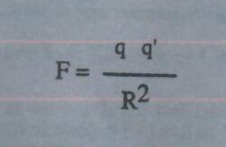
<span class="katex-display"><span class="katex"><span aria-hidden="true" class="katex-html"><span class="base"><span class="mord"><span class="mfrac"><span class="vlist-t vlist-t2"><span class="vlist-r"><span class="vlist-s">​</span></span></span></span></span></span></span></span></span>Whereas

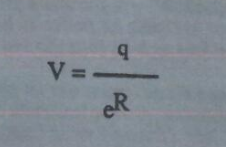
<p class="callout info">Difference of potential between two charges is measured by the work necessary to bring the charges together, and, is given by</p>

[![image-1729957581910.png](https://stanslegacy.com/uploads/images/gallery/2024-10/scaled-1680-/dHbty7meydgcMmK1-image-1729957581910.png)](https://stanslegacy.com/uploads/images/gallery/2024-10/dHbty7meydgcMmK1-image-1729957581910.png)

<span class="katex-display"><span class="katex"><span aria-hidden="true" class="katex-html"><span class="base"><span class="mord"><span class="mfrac"><span class="vlist-t vlist-t2"><span class="vlist-r"><span class="vlist-s">​</span></span></span></span></span></span></span></span></span>The potential at a point due to a **charge** (q) at a **distance** (R) in a medium whose **dielectric constant** is (e).

# ATOMIC INTERACTION TO VOLTAGE STIMULATION

[![image-1729957777023.png](https://stanslegacy.com/uploads/images/gallery/2024-10/scaled-1680-/S5tAw3FDTz0ptGiT-image-1729957777023.png)](https://stanslegacy.com/uploads/images/gallery/2024-10/S5tAw3FDTz0ptGiT-image-1729957777023.png)
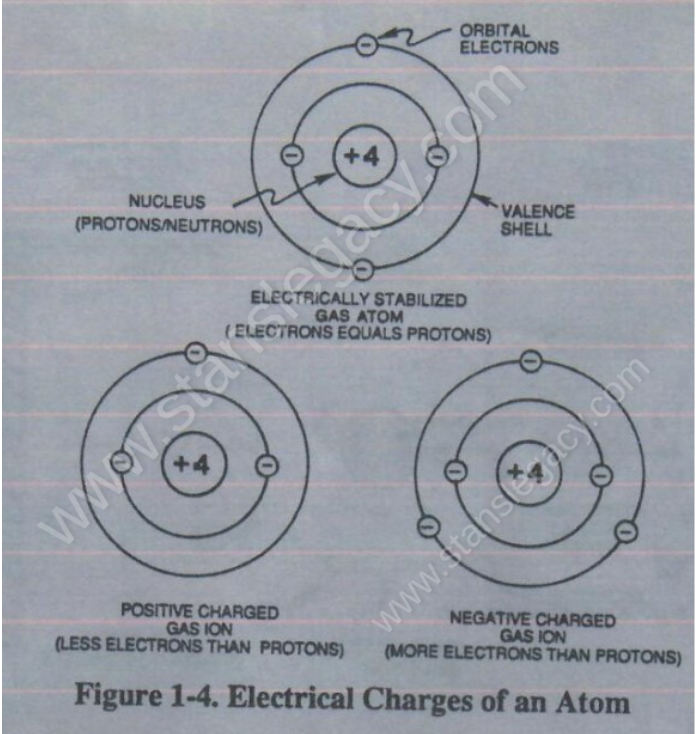
Atomic structure of an atom exhibits two types of electrical charged mass-entities, orbital electrons having **negative electrical charges** (-) and a **Nucleus** (*at least one proton*) having a **positive electrical charge** (+).

The positive electrical charge of the Nucleus equals the sum total of all negative electrical charged electrons when the Atom is in “stable-state.”

<p class="callout info">In **stable-state** or **normal-state**, the number of electrons equals the number of protons to give the atom “**NO**” net electrical charge.</p>

Whenever one or more electrons are “**dislodged**” from the atom, the atom takes-on a net positive electrical charge and is called a positive ion.

If an electron combines with an stable or normal atom, the atom has a net negative charge and is called a negative ion.

---

<p class="callout success">Voltage potential within an electrical circuit can cause one or more electrons to be dislodged from the atom due to opposite electrical polarity attraction between unlike charged entities, as shown in Figure 1-5 (see Figure 1-3 again) as to **Newton’s** and **Coulomb’s Laws** of electrical-force.</p>

<table border="1" id="bkmrk--1" style="border-collapse: collapse; width: 100%;"><tbody><tr><td style="width: 60.5701%;">[![image-1729957262428.png](https://stanslegacy.com/uploads/images/gallery/2024-10/scaled-1680-/BBmcT02kH4T3CRqR-image-1729957262428.png)](https://stanslegacy.com/uploads/images/gallery/2024-10/BBmcT02kH4T3CRqR-image-1729957262428.png)</td><td style="width: 39.4299%;">[![image-1729960689754.png](https://stanslegacy.com/uploads/images/gallery/2024-10/scaled-1680-/dmamtcwtGzMDRJnB-image-1729960689754.png)](https://stanslegacy.com/uploads/images/gallery/2024-10/dmamtcwtGzMDRJnB-image-1729960689754.png)

</td></tr></tbody></table>

[![image-1729957777023.png](https://stanslegacy.com/uploads/images/gallery/2024-10/scaled-1680-/S5tAw3FDTz0ptGiT-image-1729957777023.png)](https://stanslegacy.com/uploads/images/gallery/2024-10/S5tAw3FDTz0ptGiT-image-1729957777023.png)Newton’s and Coulomb’s Laws of electrical-force is used to combine or join atoms together by way of **Covalent Bonding** (*opposite electrical forces*) to form liquids, solids, or air.

The atom of **Argon Gas** (Ar) is, naturally, electrically stabilized when the number of electrons around the number of protons equal the atomic number of 18 on the [Periodic Table of Elements](https://pubchem.ncbi.nlm.nih.gov/periodic-table/).

<p class="callout success">The illustrated **Argon Atom** becomes electrical charged ion when the electron number changes from 18, as illustrated in Figure 1-4.</p>

# Gas Destabilization Process

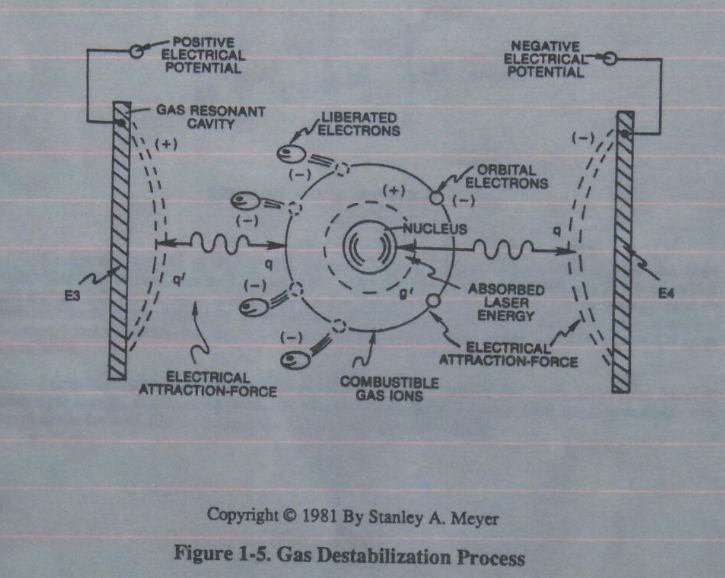
[![image-1729960689754.png](https://stanslegacy.com/uploads/images/gallery/2024-10/scaled-1680-/dmamtcwtGzMDRJnB-image-1729960689754.png)](https://stanslegacy.com/uploads/images/gallery/2024-10/dmamtcwtGzMDRJnB-image-1729960689754.png)Placement of a pulse-voltage potential across the **Excitor-Array** (ER) of **Gas Resonant Cavity** (t) while inhibiting or preventing electron flow within the **Voltage Intensifier Circuit** (AA) causes the Gas Atom of **Argon** (Ar) to become an positive charged ion by pulling away orbital electrons from the gas molecule or gas atom, as illustrated in Figure 1-5.

The stationary **"positive"** **electrical** **voltage-field** (E3) attracts the negative charged electrons from the Gas Atom.

At the same time, the stationary **"Negative"** **electrical voltage field** (E4) attracts the positive charged nucleus of the **gas atom** (s).

<p class="callout info">Once the negative electrically charged electrons are dislodged from the gas atom, the gas atom becomes destabilized…having missing electrons.</p>

Dislodging electrons from the gas atom by way of voltage stimulation is hereinafter called **"The Gas Destabilization Process."**

<p class="callout success">Attenuating and adjusting the **"pulse-voltage-amplitude"** with respect to the **"pulse voltage frequency,"** now, regulates **"The Electron Extraction Process."**</p>

# LASER INTERACTION

**Laser energy** (v) of Figure 1-1 is now injected into or superimposed onto the **Gas Destabilization Process** to help promote the **Electron Extraction Process** *since the absorbed light energy (electromagnetic energy*) forces the gas atom electrons to an higher energy state or **attraction-force** (q2) between the orbital electrons and the nucleus…

weakening the **electrical attraction-force** (qq') between the orbital electrons and the nucleus, as illustrated in Figure 1-5 as to Figure 20JX.

<table border="1" id="bkmrk-" style="border-collapse: collapse; width: 100%;"><tbody><tr><td style="width: 65.0188%;">[![image-1729960689754.png](https://stanslegacy.com/uploads/images/gallery/2024-10/scaled-1680-/dmamtcwtGzMDRJnB-image-1729960689754.png)](https://stanslegacy.com/uploads/images/gallery/2024-10/dmamtcwtGzMDRJnB-image-1729960689754.png)</td><td style="width: 34.9812%;">[![image-1729961324526.png](https://stanslegacy.com/uploads/images/gallery/2024-10/scaled-1680-/8c29PMYgLRdtaSmR-image-1729961324526.png)](https://stanslegacy.com/uploads/images/gallery/2024-10/8c29PMYgLRdtaSmR-image-1729961324526.png)

</td></tr></tbody></table>

[![image-1729961112672.png](https://stanslegacy.com/uploads/images/gallery/2024-10/scaled-1680-/rNPVEq2KzAGFbKe4-image-1729961112672.png)](https://stanslegacy.com/uploads/images/gallery/2024-10/rNPVEq2KzAGFbKe4-image-1729961112672.png)Light-emitting diodes arranged in an **Cluster-Array** provides and emits an narrow band of visible light energy, as illustrated in Figure 1-6 as to <span style="background-color: #fbeeb8;">Figure 20XX</span>.

Laser or light intensity is linear with respect to the forward current through the LEDS, and, is determined by

[![image-1729961415210.png](https://stanslegacy.com/uploads/images/gallery/2024-10/scaled-1680-/I5IhkjTCatF6TxqP-image-1729961415210.png)](https://stanslegacy.com/uploads/images/gallery/2024-10/I5IhkjTCatF6TxqP-image-1729961415210.png)

<span class="katex-display"><span class="katex"><span aria-hidden="true" class="katex-html"><span class="base"><span class="mord"><span class="mfrac"><span class="vlist-t vlist-t2"><span class="vlist-r"><span class="vlist"><span class="msupsub"><span class="vlist-s">​</span></span></span></span></span></span></span></span></span></span></span>Where

<span class="katex"><span class="katex-mathml">I<sub>led</sub></span><span aria-hidden="true" class="katex-html"><span class="base"><span class="mord"><span class="msupsub"><span class="vlist-t vlist-t2"><span class="vlist-r"><span class="vlist-s">​</span></span></span></span></span></span></span></span> is the specified forward current (typically 20ma. per diode);

<span class="katex"><span class="katex-mathml">V<sub>led</sub></span><span aria-hidden="true" class="katex-html"><span class="base"><span class="mord"><span class="msupsub"><span class="vlist-t vlist-t2"><span class="vlist-r"><span class="vlist-s">​</span></span></span></span></span></span></span></span> is the LED voltage drop (typically 1.7 volts for red emitters).

Ohm’s Law for LED circuit in parallel array, and, is given by

[![image-1729961467377.png](https://stanslegacy.com/uploads/images/gallery/2024-10/scaled-1680-/yH5GM2CS915g3ZDx-image-1729961467377.png)](https://stanslegacy.com/uploads/images/gallery/2024-10/yH5GM2CS915g3ZDx-image-1729961467377.png)

Where

<span class="katex"><span class="katex-mathml">I<sub>t</sub></span><span aria-hidden="true" class="katex-html"><span class="base"><span class="mord"><span class="msupsub"><span class="vlist-t vlist-t2"><span class="vlist-r"><span class="vlist-s">​</span></span></span></span></span></span></span></span> is the forward current through LED cluster-Array;

<span class="katex"><span class="katex-mathml">V<sub>CC</sub></span><span aria-hidden="true" class="katex-html"><span class="base"><span class="mord"><span class="msupsub"><span class="vlist-t vlist-t2"><span class="vlist-r"><span class="vlist-s">​</span></span></span></span></span></span></span></span> is volts applied (*typically 5 volts*).

# Electron Extraction Process

Whereby

Laser or light intensity is variable as to duty cycle on/off pulse-frequency from 1 Hz to 65 Hz and above, and, is given by

<span class="katex-display"><span class="katex"><span aria-hidden="true" class="katex-html"><span class="base"><span class="mord sqrt"><span class="vlist-t vlist-t2"><span class="vlist-r"><span class="vlist-s">[![image-1729961596472.png](https://stanslegacy.com/uploads/images/gallery/2024-10/scaled-1680-/vhrhW85i3qtQbTAb-image-1729961596472.png)](https://stanslegacy.com/uploads/images/gallery/2024-10/vhrhW85i3qtQbTAb-image-1729961596472.png)​</span></span></span></span></span></span></span></span>

<p class="callout info"><span class="katex"><span class="katex-mathml">L<sub>e</sub></span><span aria-hidden="true" class="katex-html"><span class="base"><span class="mord"><span class="msupsub"><span class="vlist-t vlist-t2"><span class="vlist-r"><span class="vlist-s">​</span></span></span></span></span></span></span></span> is light intensity in watts; <span class="katex"><span class="katex-mathml">T<sub>1</sub></span></span> is current on-time; <span class="katex"><span class="katex-mathml">T<sub>2</sub></span></span> is current off-time; and (ION) = RMS value of load current during on-period.</p>

<p class="callout success">By varying or regulating laser intensity <span style="text-decoration: underline;">in direct relationship to</span> applied pulse-voltage frequency and voltage amplitude causes the inert gas atom of **Argon** (Ar) to become a positive charged gas ion having missing electrons.</p>

<p class="callout warning">The **Gas Destabilization Process** with **Laser Injection** is, also, applicable to other types of airborne or free-floating atoms.</p>

---

[![image-1729961570293.png](https://stanslegacy.com/uploads/images/gallery/2024-10/scaled-1680-/IVsmnYjO91b2mWUJ-image-1729961570293.png)](https://stanslegacy.com/uploads/images/gallery/2024-10/IVsmnYjO91b2mWUJ-image-1729961570293.png)

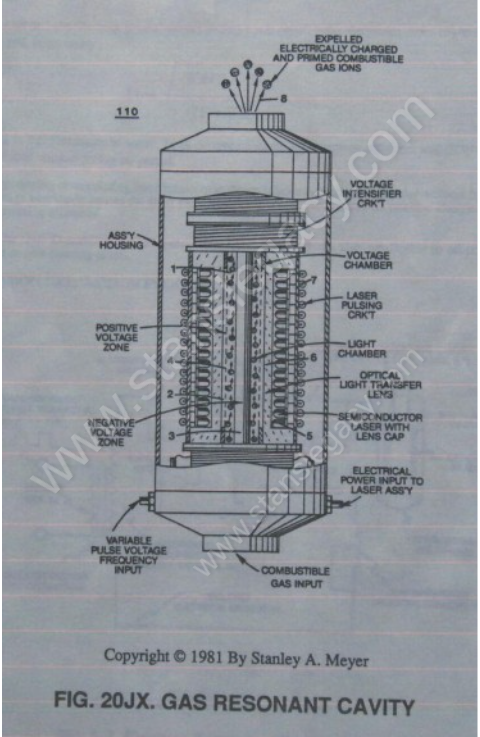
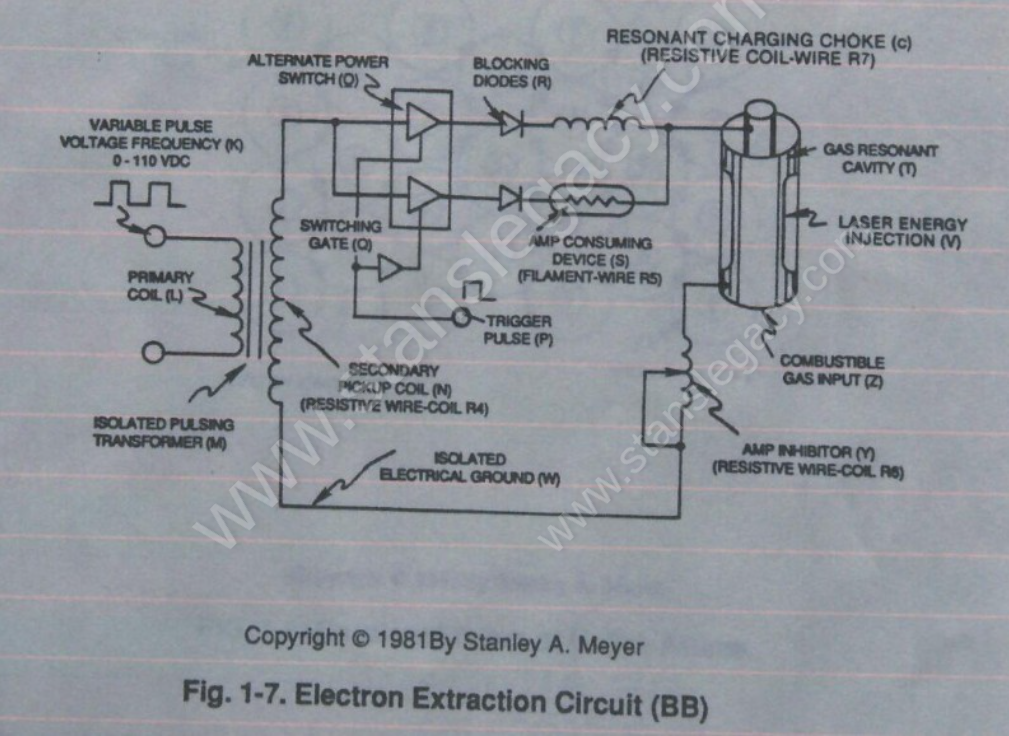
**Electron Extraction Circuit** (BB) of Figure 1-7 removes, captures, and consumes the "dislodged" electrons (*from the gas atoms*) to cause the gas atoms to go into and reach "ion-state," forming highly energized gas atoms having missing electrons.

<p class="callout success">**Resistive values** (R4, R6, R7, and **dielectric constant of gas** Rg) and **isolated electrical ground** (W) prevents "electron-flow" or "electron deflection" from occurring within **circuit** (BB) during pulsing operations (*at resonant frequency*) and, therefore, keeps the gas atoms in ion state by **"NOT"** allowing electron replacement to occur or take place between the moving gas atoms.</p>

[![image-1729960689754.png](https://stanslegacy.com/uploads/images/gallery/2024-10/scaled-1680-/dmamtcwtGzMDRJnB-image-1729960689754.png)](https://stanslegacy.com/uploads/images/gallery/2024-10/dmamtcwtGzMDRJnB-image-1729960689754.png)The "dislodged" negative charged electrons are "destroyed" or "consumed" in the form of "heat" when **Amp Consuming Device** (S) (*such as a light bulb*) is <span style="text-decoration: underline;">positive electrically energized</span> during alternate pulsing operations.

Laser activated or laser primed gas ions repels the "dislodged" electrons being consumed, as illustrated in Figure 1-5.

<p class="callout success">The **Electron Extraction Process** (BB) is, hereinafter, called **"The GAS RESONANT CAVITY,"** as illustrated in Figure 1-7 as to Figure 20JX.</p>

<table border="1" id="bkmrk--0" style="border-collapse: collapse; width: 100%;"><tbody><tr><td style="width: 66.7498%;">[![image-1729961570293.png](https://stanslegacy.com/uploads/images/gallery/2024-10/scaled-1680-/IVsmnYjO91b2mWUJ-image-1729961570293.png)](https://stanslegacy.com/uploads/images/gallery/2024-10/IVsmnYjO91b2mWUJ-image-1729961570293.png)</td><td style="width: 33.2502%;">[![image-1729961324526.png](https://stanslegacy.com/uploads/images/gallery/2024-10/scaled-1680-/8c29PMYgLRdtaSmR-image-1729961324526.png)](https://stanslegacy.com/uploads/images/gallery/2024-10/8c29PMYgLRdtaSmR-image-1729961324526.png)</td></tr></tbody></table>

# Magnetic Gas Lattice

[![Screenshot from 2024-10-25 21-38-38.png](https://stanslegacy.com/uploads/images/gallery/2024-10/scaled-1680-/4gxWQphJNL2SHlJ8-screenshot-from-2024-10-25-21-38-38.png)](https://stanslegacy.com/uploads/images/gallery/2024-10/4gxWQphJNL2SHlJ8-screenshot-from-2024-10-25-21-38-38.png)The forming **Argon ion** (Ar+) is now exposed to **Iron ions** (Fe+) (magnetic properties) experiencing and undergoing the same **Electron Extraction Process**.

Together, the **two** **ions** (Ar+/Fe+) form a covalent link up or **covalent bond** when the covalent electron of the **Argon ion** (Ar+) pair up and be shared with the valence electron of the **Iron ion** (Fe+).

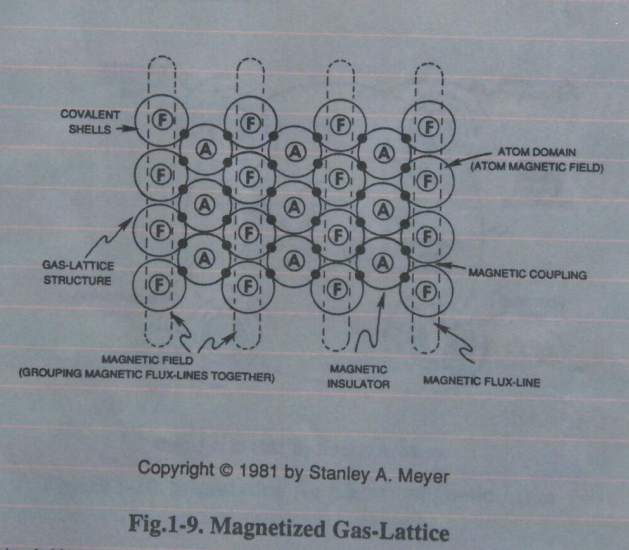
Covalent bonding of **Iron ions** (Fe+) to the **Argon ion** (Ar+) continues until a geometrical **Gas-Lattice Structure** is formed, as illustrated in Figure 1-8.

Stable-state of the **Gas-Lattice** occurs when the covalent shell of each unlike atom structure becomes full or filled up… the **Argon atom** (Ar) sees an covalent shell of 8 electrons while, at the same time, the **Iron atom** (Fe) sees an **covalent shell** (M shell) of 14 electrons.

<p class="callout info">Covalent bonding between like atoms does not occur due to the “stronger” **Electrical Attraction-Force** (qq') between the unlike atoms.</p>

<p class="callout success">During Gas-Lattice formation, **Iron ions** (Fe+) can be replaced by other atoms exhibiting magnetic properties such as **Nickel ions** (Ni+) or **Cobalt ions** (Co+).</p>

<p class="callout info">**Gas-Lattice formation** of unlike atoms by way of the **Electron Extraction Process** is, hereinafter, called **"The Gas Bonding Process"**.</p>

# Electromagnetic Enhancement

The newly **"structured"** Gas-Lattice becomes magnetized when, momentarily, exposed to a magnetic field, as illustrated in Figure 1-9.

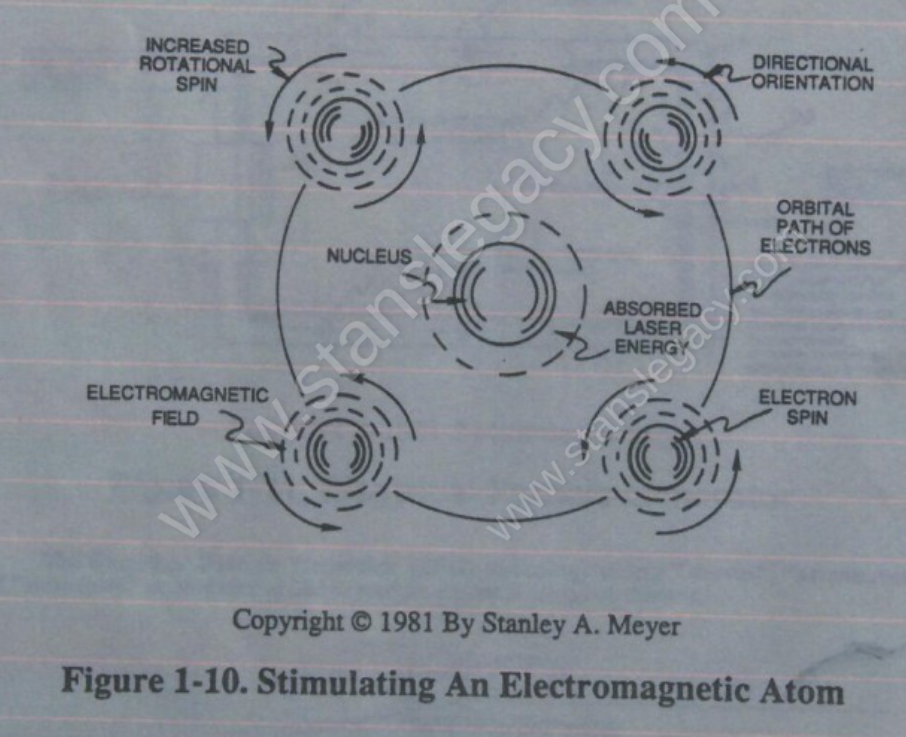
Since the electrons of the **Iron ion** (Fe+) spin in one direction only (*SEE FIGURE 1-10*) (*Nickel ions and Cobalt ions in like manner*), the magnetic field of each Iron ion (*called Domains*) unite and form a "Discrete" magnetic field called an **"Magnetic Flux-Line"**.

<table border="1" id="bkmrk-" style="border-collapse: collapse; width: 100%;"><tbody><tr><td style="width: 51.6681%;">[![image-1729968565897.png](https://stanslegacy.com/uploads/images/gallery/2024-10/scaled-1680-/oXF2FKsD6nLxZRtN-image-1729968565897.png)](https://stanslegacy.com/uploads/images/gallery/2024-10/oXF2FKsD6nLxZRtN-image-1729968565897.png)

</td><td style="width: 48.3319%;">[![image-1729968529604.png](https://stanslegacy.com/uploads/images/gallery/2024-10/scaled-1680-/ZAeR0gjRwhmhQlRO-image-1729968529604.png)](https://stanslegacy.com/uploads/images/gallery/2024-10/ZAeR0gjRwhmhQlRO-image-1729968529604.png)</td></tr></tbody></table>

The **Magnetic Flux Line** follows the alignment of the **Iron ions** (Fe+ xxx Fe+) since **Argon ions** (Ar+ xxx Ar+) act as an "insulator" to the flow of magnetic Flux-Lines.

The **Argon** atom electrons tend to pair-off in orbits with opposite spins… preventing the formation of a second magnetic field.

<p class="callout success">Grouping the **Magnetic Flux-Lines** together forms an **"Stable"** magnetic field since the magnetic coupling-field between the Iron ions or Domains help to hold the Iron ions in an linear alignment beyond the bonding strength of the **Gas-Lattice**.</p>

<p class="callout info">Magnetic Field Strength is **"measured"** in GAUSS UNITS and is <span style="text-decoration: underline;">determined by the linear volume</span> of the Gas-Lattice.</p>

# Magnetic Field Enhancement

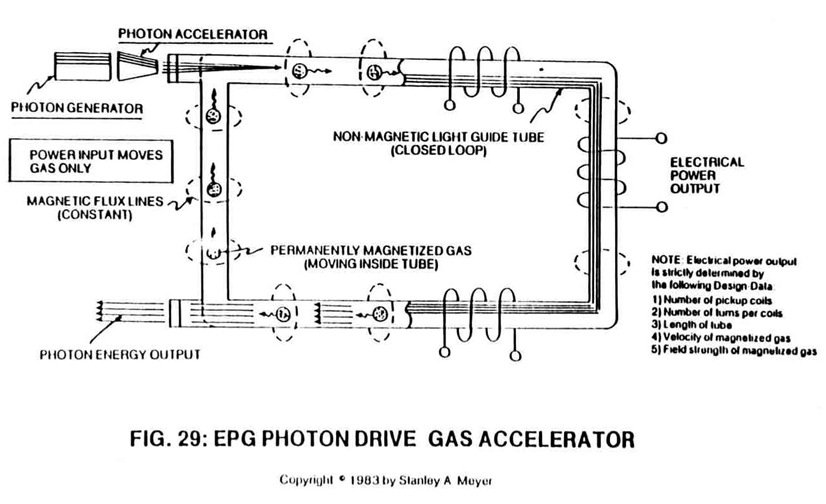
**[![image-1729968719689.png](https://stanslegacy.com/uploads/images/gallery/2024-10/scaled-1680-/5lkF2do24wqUm7pz-image-1729968719689.png)](https://stanslegacy.com/uploads/images/gallery/2024-10/5lkF2do24wqUm7pz-image-1729968719689.png)Magnetic Field Enhancement** occurs when the **Magnetized Gas-Lattice** (placed inside EPG close-loop tubular system) is exposed to and interacts with **Laser energy**, as illustrated in Figure 29 WFC Tech-brief.

The absorbed Laser energy forces the Iron ions' **ELECTRONS** to spin at a faster rate when taken to a higher energy level, which, in turn, amplifies and strengthens the magnetic field (*Domain magnetic field*) of the Iron ions.

<p class="callout success">The spinning electrons simply interact with both electrostatic forces and electromagnetic forces to produce an enhanced magnetic field.</p>

> This magnetic process is an extension of **"The Electron Theory Of Magnetism"**.

<p class="callout info">Increasing Laser intensity increases the magnetic field strength of the gas-lattice in a linear function. **NICKEL IONS** and **COBALT IONS** <span style="text-decoration: underline;">are interchangeable with and duplicate</span> the magnetic properties of Iron ions undergoing Laser priming.</p>

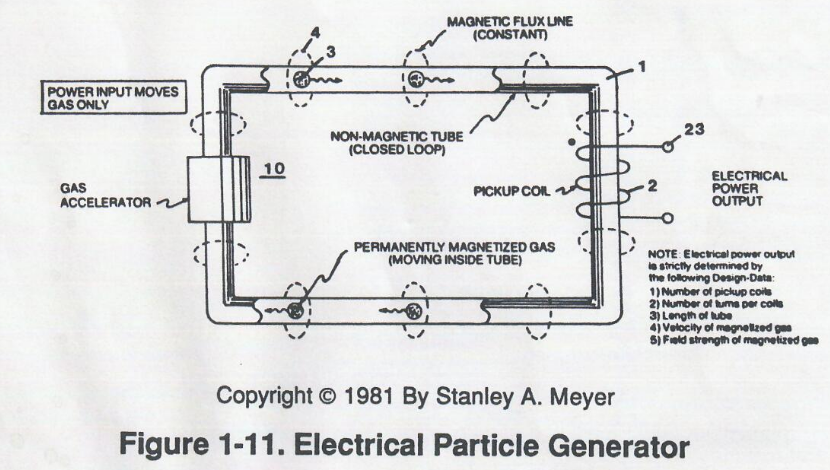
[![image-1729568854073.png](https://stanslegacy.com/uploads/images/gallery/2024-10/scaled-1680-/MfYuwau4z4tLpfGE-image-1729568854073.png)](https://stanslegacy.com/uploads/images/gallery/2024-10/MfYuwau4z4tLpfGE-image-1729568854073.png)In **Quiescent-State**, the laser energy is superimposed onto the **Gas-Lattice** and "stored" inside the close-loop tubular EPG system to maintain a given or predetermined magnetic field strength during EPG operations.

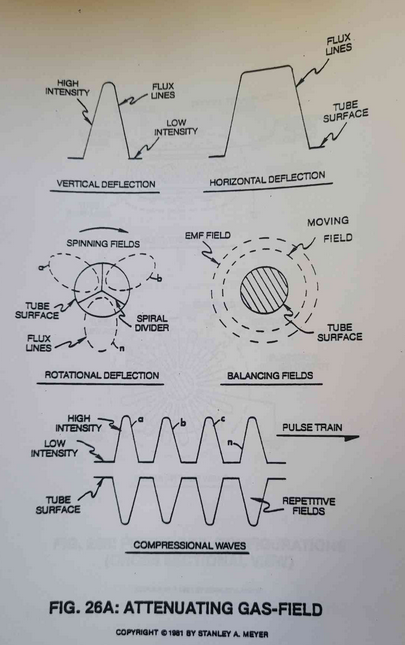
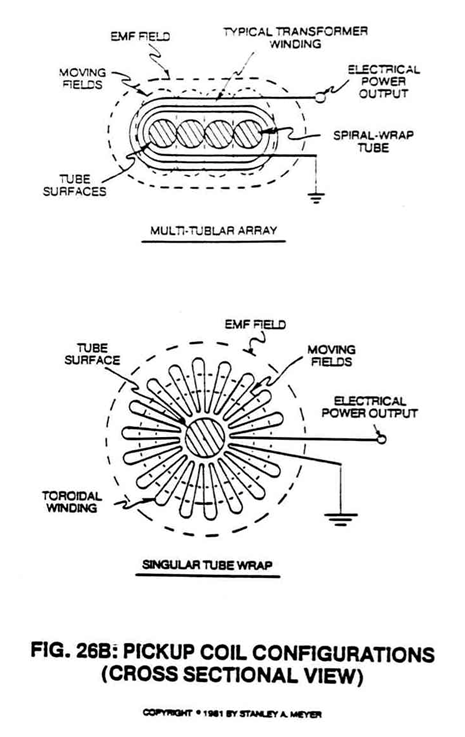
<p class="callout success">In **Active-State**, the laser energy is pulsed and passes through the **Gas-Lattice** to produce a magnetic pulse-wave, as illustrated in Figure 29 as to Figure 26A and 26B.</p>

<table border="1" id="bkmrk-" style="border-collapse: collapse; width: 100%;"><tbody><tr><td style="width: 49.9383%;">[![image-1729730005256.png](https://stanslegacy.com/uploads/images/gallery/2024-10/scaled-1680-/D4Qg7p3ENqyP0N8k-image-1729730005256.png)](https://stanslegacy.com/uploads/images/gallery/2024-10/D4Qg7p3ENqyP0N8k-image-1729730005256.png)</td><td style="width: 49.9383%;">[![image-1729730524941.png](https://stanslegacy.com/uploads/images/gallery/2024-10/scaled-1680-/rYPtRRwOcSG20Hyf-image-1729730524941.png)](https://stanslegacy.com/uploads/images/gallery/2024-10/rYPtRRwOcSG20Hyf-image-1729730524941.png)</td></tr></tbody></table>

<p class="callout info">In either case, the resultant magnetic field transverses pickup-coils to produce electrical energy.</p>