WFC 435 - Indy "500" Car
- WFC Proposal
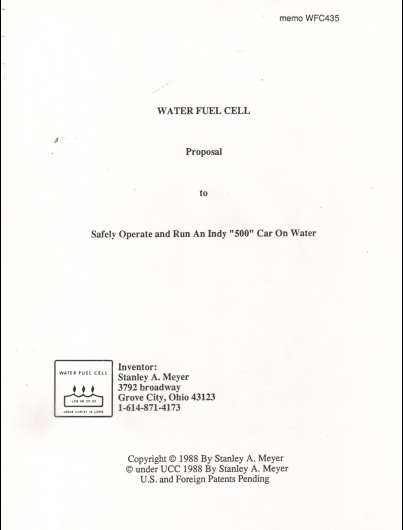
- WFC - Resonant Cavity Assembly
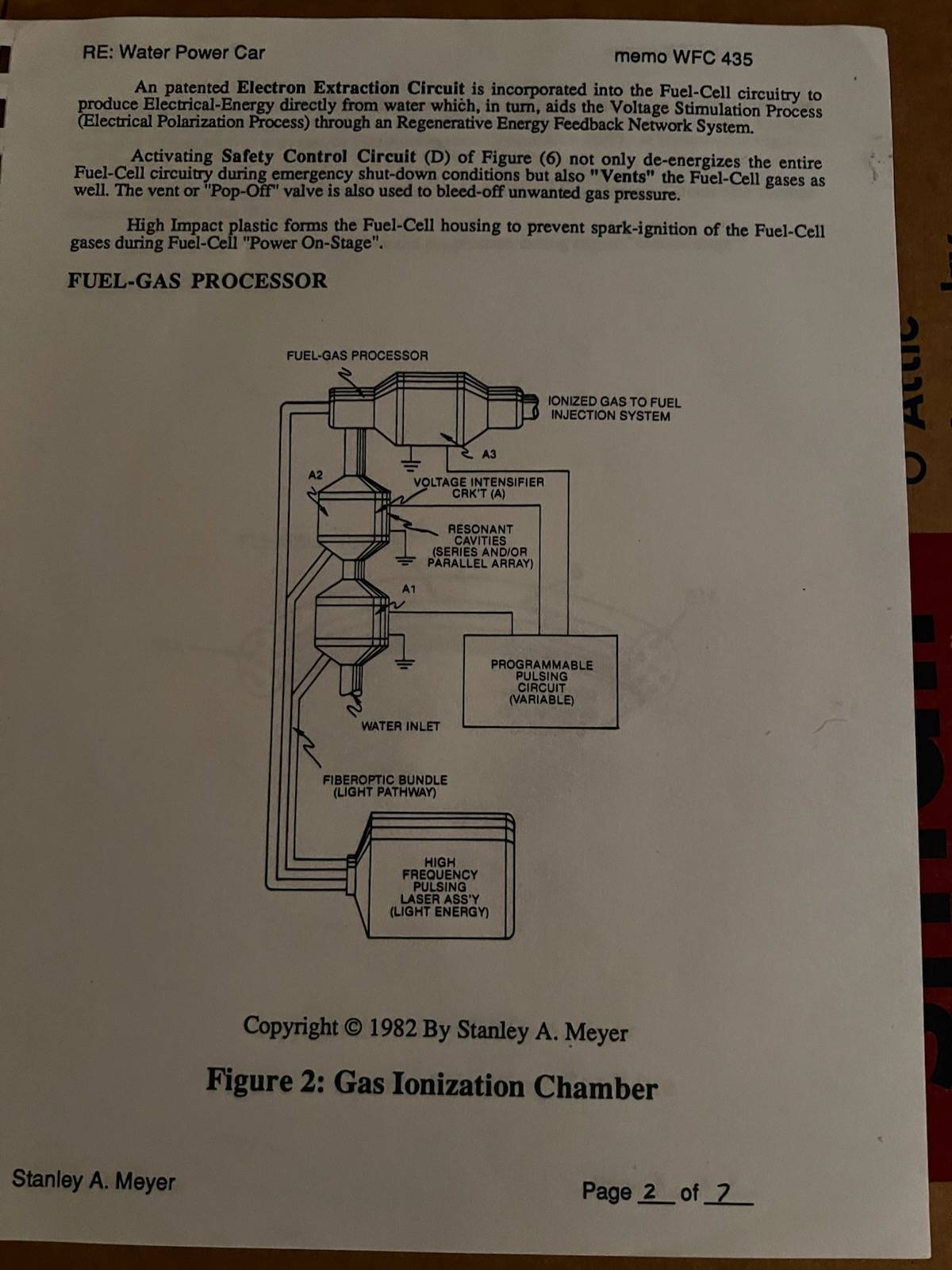
- Fuel Gas Processor
- Fuel-Gases / Quenching Tube
- Rendering Hydrogen Safe
- Engine Retrofit
- Emergency Shut-Down
- Water Powered Car
WFC Proposal
WFC - Resonant Cavity Assembly
The Water Fuel Cell is a patented process that utilizes an solid-state electronic control system to produce hydrogen gas on demand from water by way of voltage stimulation called "The Electrical Polarization Process", as illustrated in Figure 1 as to Figure 2.
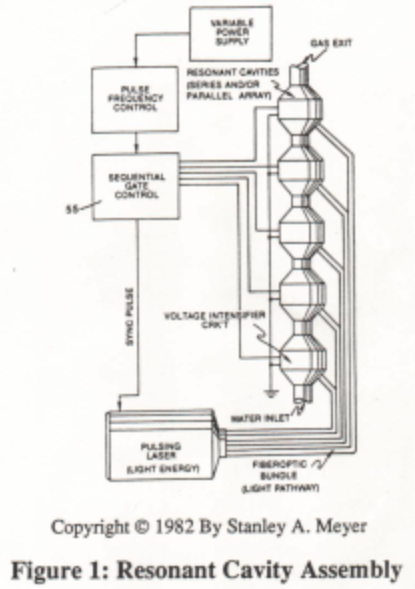
The Fuel-Cell is composed of Resonant Cavities pre-arranged to maximize Fuel-Energy delivery to the car engine, as illustrated in Figure 2 as to Figure 4.
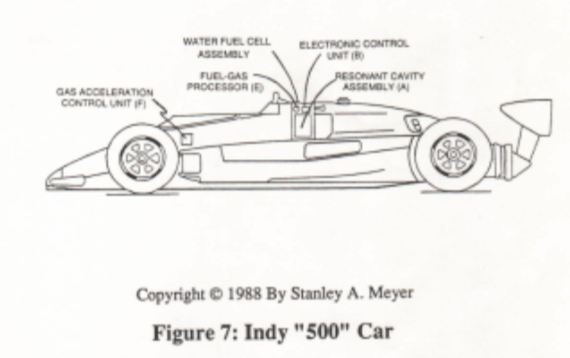
The Electronic Control Unit (B) of Figure (7) is electrically and mechanically linked to the Gas-Pedal to form a Gas Acceleration Control Unit (F) that electronically regulates and varies hydrogen gas flow-rate to engine...controlling engine RPM by way of voltage deflection through a patented electronic circuit called a "Voltage Intensifier Circuit".
Hydrogen Storage is "Not" required since hydrogen gas is being produced on demand.
Original Content Image
Fuel Gas Processor
An patented Electron Extraction Circuit is incorporated into the Fuel-Cell circuitry to produce Electrical-Energy directly from water which, in turn, aids the Voltage Stimulation Process (Electrical Polarization Process) through an Regenerative Energy Feedback Network System.
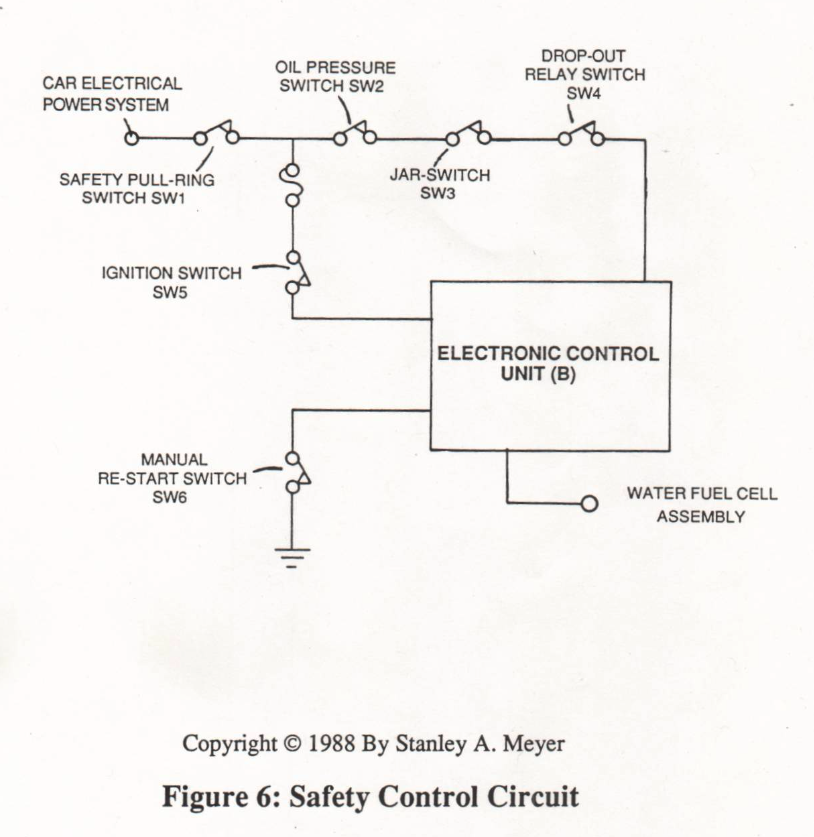
Activating Safety Control Circuit (D) of Figure (6) not only de-energizes the entire Fuel-Cell circuitry during emergency shut-down conditions but also “Vents” the Fuel-Cell gases as well. The vent or “Pop-Off” valve is also used to bleed-off unwanted gas pressure.
High Impact plastic forms the Fuel-Cell housing to prevent spark-ignition of the Fuel-Cell gases during Fuel-Cell “Power On-Stage”.
 (Diagram labels as shown)
-
FUEL-GAS PROCESSOR
-
IONIZED GAS TO FUEL INJECTION SYSTEM
-
VOLTAGE INTENSIFIER CRKT (A)
-
RESONANT CAVITIES (SERIES AND/OR PARALLEL ARRAY)
-
PROGRAMMABLE PULSING CIRCUIT (VARIABLE)
-
WATER INLET
-
FIBEROPTIC BUNDLE (LIGHT PATHWAY)
-
HIGH FREQUENCY PULSING LASER ASS’Y (LIGHT ENERGY)
Copyright © 1982 by Stanley A. Meyer
Figure 2: Gas Ionization Chamber
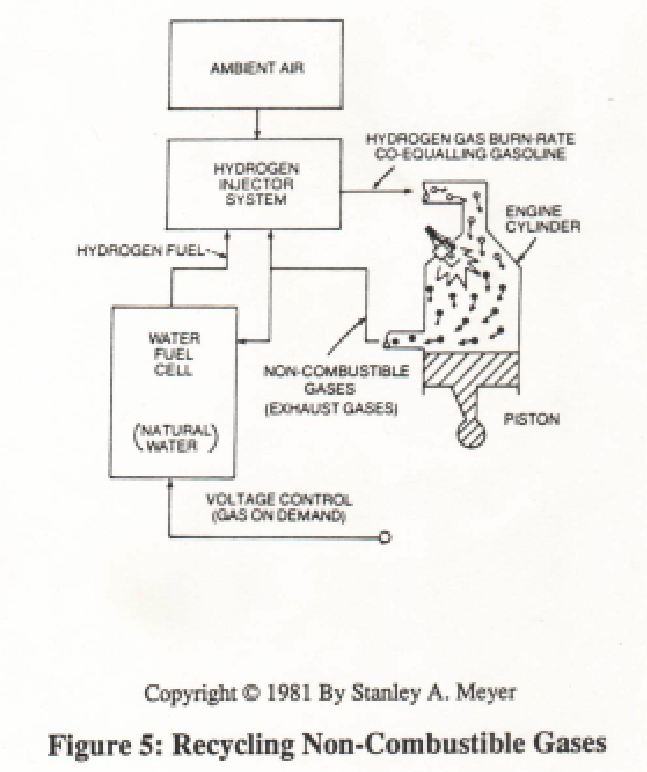
Fuel-Gases / Quenching Tube
The liberated and traveling Fuel-Gases enters into ans passed through a patented Fuel-Gas Processor (E) that performs and functions as a Gas Ionization Chamber when another Voltage Intensifier Circuit (A3) is activated by Gas Acceleration Control Unit (B/F), as illustrated in Figure 2 as to Figure 7
|
Figure 2 |
Figure 7
|
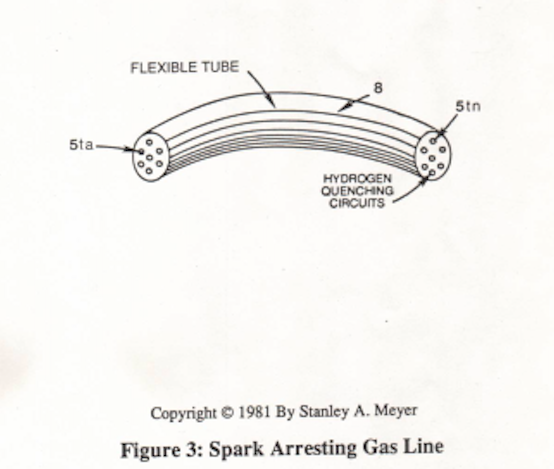 Voltage Intensifier Circuit (A3) is interlocked with Safety Control Circuit (D) through Electronic Control Unit (B).
Gas Bleed-Off Valve prevents unwanted gas pressure during engine "turn-on stage".
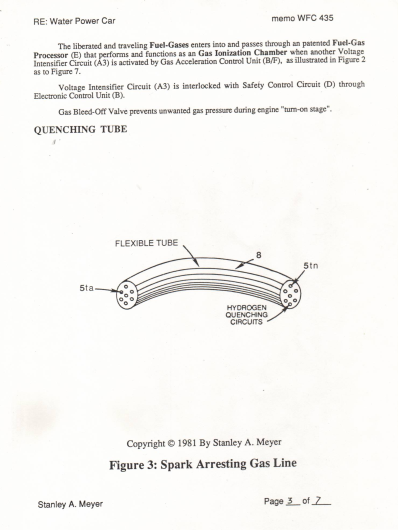
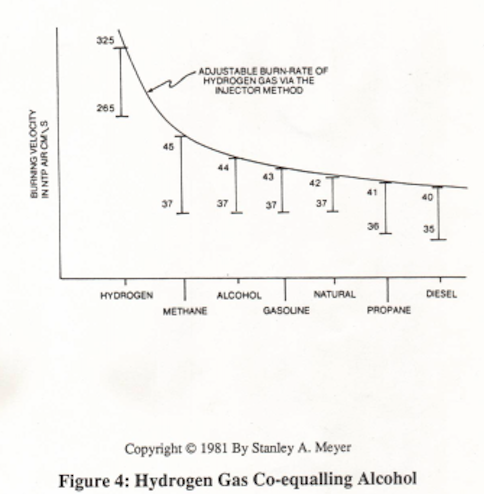
The Fuel-Cell Assembly of Figure (7) is directly retrofitted to the car engine without engine-change since the patented Hydrogen Gas-Mixture co-equals the burn-rate of Alcohol (from 325cm/sec. to 44 cm/sec.), as illustrated in Figure 4 as to Figure 5.
Non-combustible gases (gases that do not support the Gas Combustion Process) supplied by the Water intermixes with the librerated hydrogen and oxygen gases to form the hydrogen gas-mixture (44 cm/sec.)
The hydrogen gas-mixture remains constant regardless of the gas flow-rate since water acts and performs as a Gas-Mixing Regulator.
|
Figure 4
|
Figure 5
|
Original Content
Rendering Hydrogen Safe
Engine Retrofit
Emergency Shut-Down
To "Fine-Tune" or "adjust" the hydrogen burn-rate still further to obtain maximum engine performance, non-combustible gases from the engine exhaust system is meter mixed with the Fuel-Cell Gases under control means, as illustrated in Figure 5.
The engine provides the non-combustible gases on demand since Ambient Air is used firing the Gas Combustion Process.
Water Powered Car
In case of engine failure, Safety Control Circuit (H) of Figure (6) is automatically activated to "switch-off" power loading to Electronic Control Unit (B) ...electrically de-energizing the Fuel-Cell ...stopping gas-flow to engine.
Oil Pressure Switch (SW2) is activated when engine oil pressure "Drops" to a predetermined level.
Jar-switch (SW3) is activated when a car crash occurs; whereas "Drop-out" Relay-Switch (SW4) is activated when Electronic Control Unit (B) senses a Fuel-Cell malfunction.
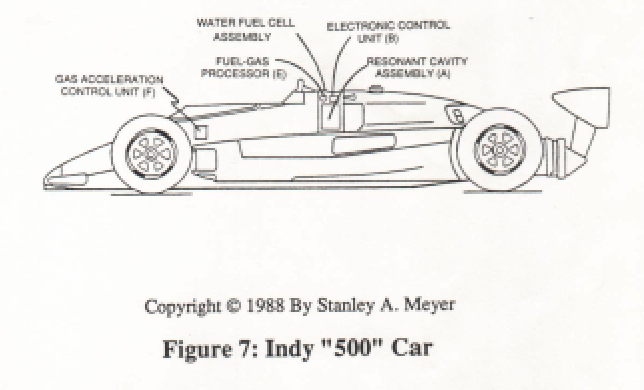
Retrofitting The Water Fuel Cell to an Indy "500" Car does "Not" compromise the Safety Integrity of the car but rather promotes Driver Safety since water is a non-burnable Fuel-Liquid.