In reference to Voltage Intensifier Circuit 9XA as to dual-voltage schematic 20YA and pulse voltage waveform 16A/20YA Section AA, the following operational parameters exist:
[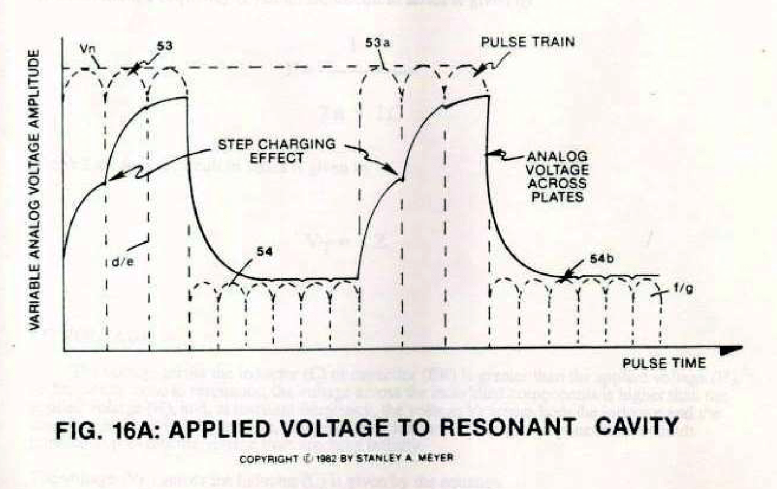](https://stanslegacy.com/uploads/images/gallery/2024-10/teWQHV77FyNS7NVn-image-1729532146629.png) #### **Electronic Interfacing Circuit:** - **Secondary Pickup Winding** (resistive wire coil) (42) - **Blocking Diode** (14) - **Resonant Charging Choke** (resistive wire coil) (43) - **Resonant Cavity Inner Surface** (45) (forming a Positive Electrical Voltage Zone), - **Resonant Cavity Outer Surface** (44) (forming a Negative Voltage Zone) - **Voltage zones surface area** (44/45) form the Capacitance value of said **Resonant Cavity Assembly** (4) of Figure 12. Natural Water inside said **Resonant Cavity Assembly** (44/45) provides the dielectric value between said **voltage zones** (44/45), **resonant charging choke** (47) to electrical ground forms and completes the **Voltage Intensifier Circuit** 9XA as to 20YA.| [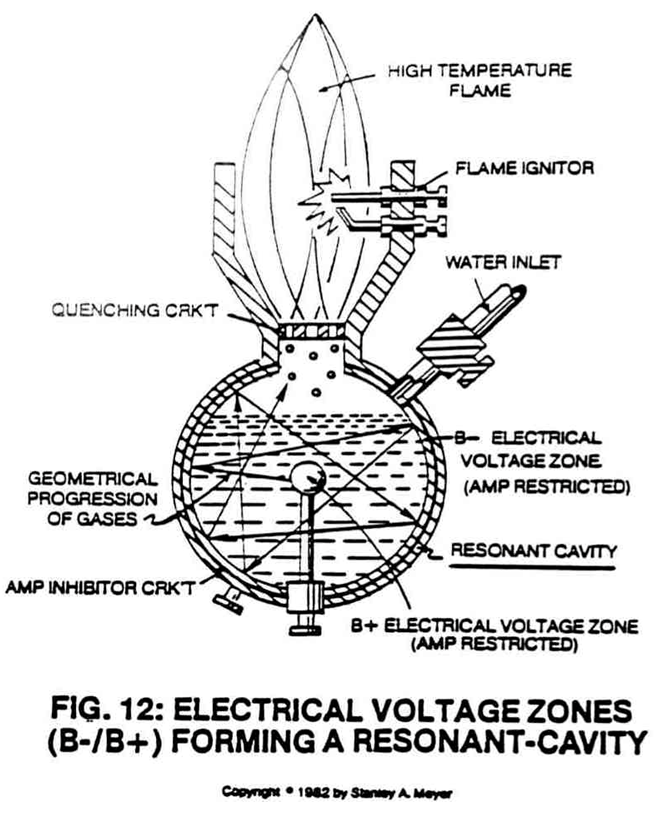](https://stanslegacy.com/uploads/images/gallery/2024-10/ZAhFd74xUdz1mzin-image-1729267471403.png) | [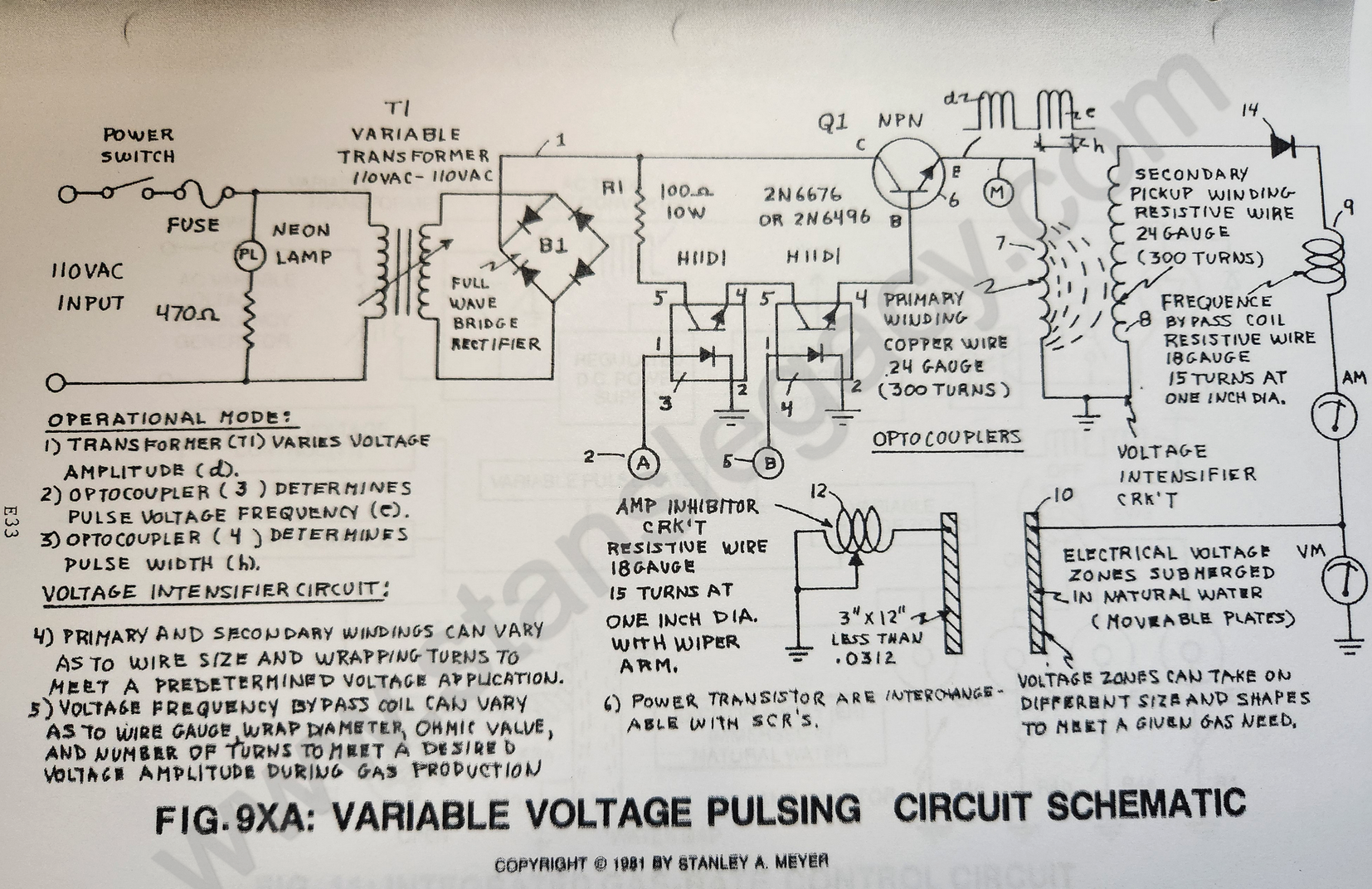](https://stanslegacy.com/uploads/images/gallery/2024-10/l16N0eiYU2kdSwXM-image-1729045722557-28-36.png) |
**Scientific Fact:** Since electrons are negatively electrically charged, electron flow (amp flow) always moves toward positive electrical potential... if allowed.
--- ### **Block Diode (14)** Since **Blocking Diode** (14) conducts electricity in one direction "ONLY" (*direction of schematic arrow*), electron flow or movement toward said **pickup coil** (42) is prevented during said **Positive Voltage Potential** formation. # Dual Voltage Resonant "Q" - Part 2 ### **Resonant Charging Choke (43)** Said **Resonant Charging Choke** (43) is a Modulator Inductor which sets up an oscillation of a given charging frequency (voltage pulsing rate) with the effective capacitance of a pulse-forming network in order to charge a line to high voltage. > See *Modern Dictionary of Electronics* 5th Edition by Rudolf F. Graf. The resistive value of said **Charging Choke** (43) acts as a resistor, preventing amp flow still further. ### **Electrical Voltage Zones (44/45)** [](https://stanslegacy.com/uploads/images/gallery/2024-10/ohbO0cHOpWHtIwXR-image-1729525485071.png) Said High Voltage Output from said **Resonant Charging Choke** (43) forms a Positive Electrical Voltage Pulse Potential (voltage zone) across **surface area** (45) immersed in natural water, see step-charging graph 16A as to 20YA Section AA again. --- > **Scientific Fact:** > Stainless Steel Material T304 forming said **voltage zone** (45) does **NOT** chemically interact with liberated hydrogen, oxygen, and ambient air gases in natural water when exposed to a voltage potential during amp restrictions. --- ### **Capacitance** Capacitance value is formed between said **conductor plates** 44/45 (voltage zones) since the dielectric value (the insulating or non-conducting medium between two plates) of natural water is relatively high. This opposes any changes in circuit voltage.A voltage change cannot occur until the stored charges can be altered through current flow... if allowed.
Component arrangement of said Voltage Intensifier Circuit 9XA as to 20YA retards or prevents amp flow.| [](https://stanslegacy.com/uploads/images/gallery/2024-10/l16N0eiYU2kdSwXM-image-1729045722557-28-36.png) | [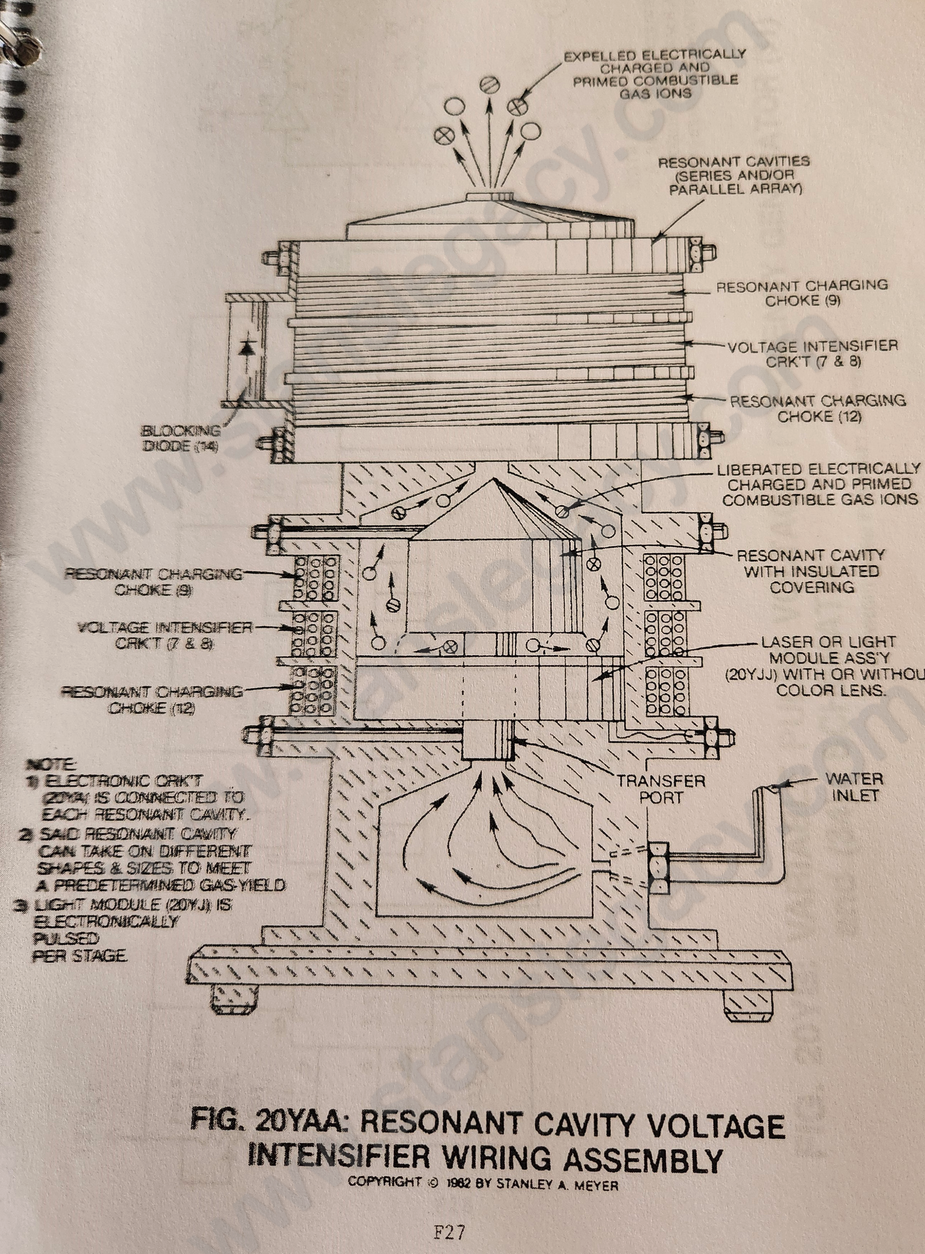](https://stanslegacy.com/uploads/images/gallery/2024-10/yRRy0MKUNLI1yHEm-image-1729045880432-31-14.png) |
**Scientific Fact:** Distilled water is an insulator to the flow of amps; natural water has less than 20ppm of any type of contaminates and maintains a high dielectric constant.
--- ### **Resistor Component (47)** Another **Resonant Charging Choke** (47) is placed between said **negative voltage zone** (44) and said **circuit electrical ground** (48) to help maintain the resistance value (voltage level) within the Resonant Cavity during charging. The resistive value of said **wire-coil** (47) prevents amp flow while performing in like manner as a Resonant Charging Choke. --- ### **Resonant Action as to Voltage Stimulation of the Water Molecule** Resonant Action occurs when the Voltage Intensifier Circuit 9XA as to 20YA set up a circuit condition whereby the **inductive** (43/45) and **capacitive reactance** (44/47) (or circuit impedance) components of said circuit have been balanced. The Circuit is "tuned" to resonance at a certain pulse voltage frequency (reaching resonant "Q")... allowing voltage stimulation of the water molecule... performing the Electrical Polarization Process at **Resonant "Q."****Scientific Fact:** The ability of an inductor and a capacitor in a series-resonant circuit delivers a voltage several times greater than the input voltage.
--- ### **Resonant Cavity Structure vs Applied Pulse-Voltage** By simply varying the applied voltage amplitude in direct relationship to a variable pulse voltage frequency, the Resonant Cavity Structure can take on different shapes to maximize voltage stimulation of the water molecule to release hydrogen gas under control means.Voltage range from zero to 5,000 volts; pulse-voltage frequency range from zero to one megahertz; amp flow being restricted to a minimum value.
--- ### **Dual Voltage Resonant "Q"****Low Amplitude Pulse Voltage Frequency** (54) is injected between **Pulse Voltage Frequency** (53) to keep an electrical charge on said water molecule during Resonant "Q."