

patent · US4556294A
Hexagonal conical beam concentrator
3 December 1985
Text
Page 1bibliographic recordscan →
United States Patent (19)
Clegg
(54) HEXAGONAL CONICAL BEAM
CONCENTRATOR
76 Inventor: John E. Clegg, 2320 Keystone Dr.,
Orlando, Fla. 32806
Int. Cl.'............................ F24J 3/02; G02B 3/04 52 U.S. C. .................................... 350/432; 350/451;
58 Field of Search ........................ 350/432, 433-435,
2,881,654 4/1959 Toffolo ............................... 350/432 2,882,784 4/1959 Toffolo ... ... 350/432 3,493,291 2/1970 Webb .................................. 126/440
3,998,204 12/1976 Fuchs et al. .... a 126/440 4,057,048 11/1977 Maine .................................. 126/440 4,277,148 7/1981 Clegg .................................. 350/432 4,325,612 4/1982 Clegg ...... ... 350/432 4,333,713 6/1982 Clegg .................................. 350/432 Primary Examiner-John K. Corbin
Assistant Examiner-Scott J. Sugarman
A conical stage lens which receives a convergent coni cal beam of diffused sunlight and emits a concentrated circular whole beam. The lens is mounted on a tapered hexagonal base which allows the lenses to be mounted side by side to form a sphere. The concentrated beams are projected onto a heating element at the center of the sphere.
1 Claim, 2 Drawing Figures
Drawings
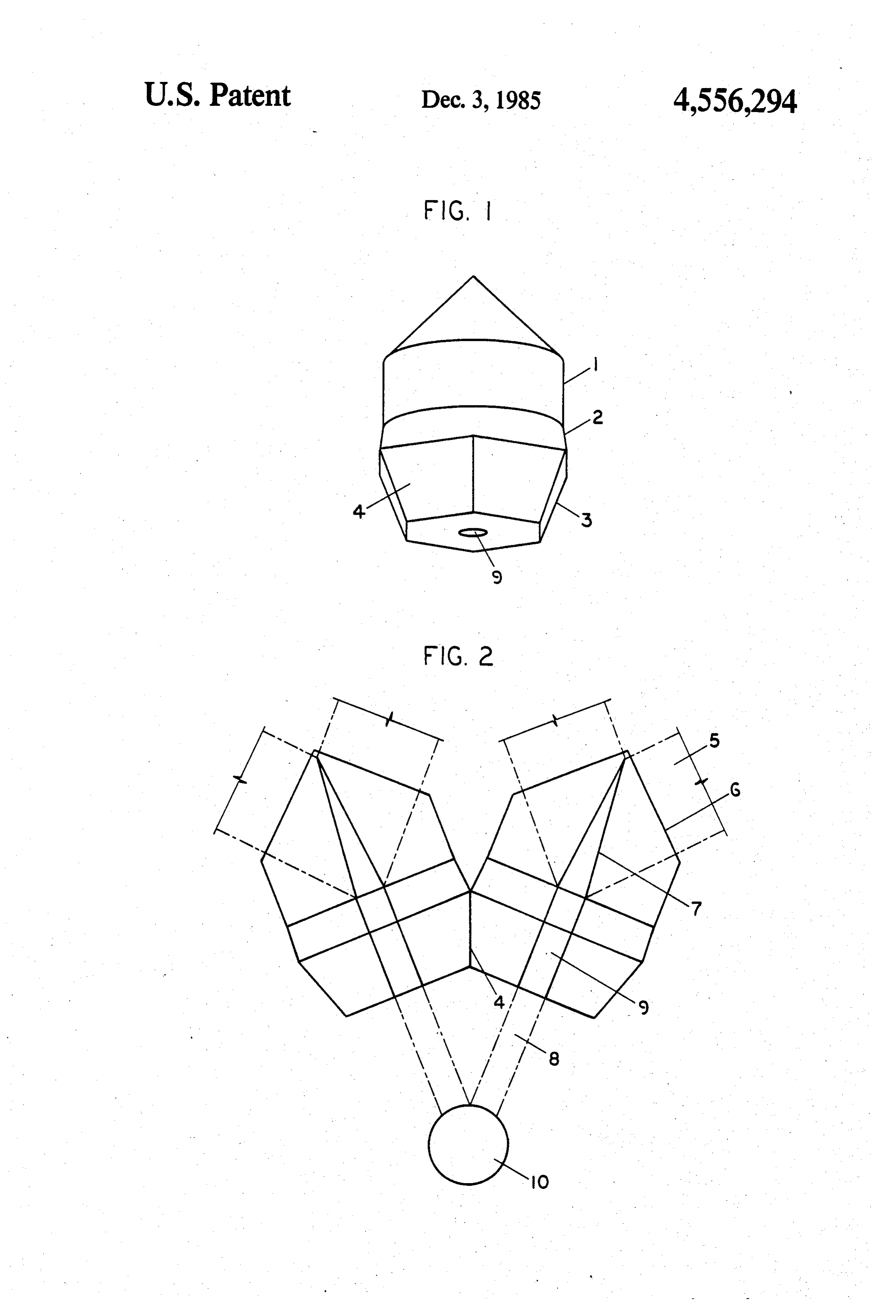
FIG. 2 shows the two concentrators mounted side by
FIG. 1 is a perspective view of the hexagonal conical I claim:
Page 2drawing sheetscan →
Page 3scan →
projected planes of the sides intersect the axis at a com
HEXAGONAL CONCAL, BEAM CONCENTRATOR mon point.
FIG. 2 shows the two concentrators mounted side by
BACKGROUND side with two sides 4 of hexagonal bases 3 in contact. The code designation of the concentrator is RT:C 5 Additional concentrators can be mounted to the right and left and front and rear of the concentrators shown
(R-refracting section of a stage lens, T-transmitting section of a stage lens, and C-concentrating stage to form a dome similar to the geodesic dome. If the concentrators are mounted above water or a reflective lens).
Prior art includes the Conical Refractor, U.S. Pat. O surface, a sphere can be formed to receive radiation from above and below the concentrators.
No. 2,882,784, 4/21/84, by D. S. Toffolo. This lens is FIG. 2 shows the concentrators with a ray diagram. similar in shape, but it is designed to receive an annular
Convergent conical incipient beam 5 of diffused sun beam and emit a concentrated circular whole beam. It light is received and transmitted by convex conical cannot produce a concentrated circular whole beam section 6 and refracted by concave conical section 7, from a convergent conical beam because its convex and 15 forming concentrated circular whole bean 8 which is concave sections are parallel. projected through hole 9 in adjoining section 2 and DRAWINGS hexagonal base 3 to a spherical heating element 10 mounted below the concentrators.
FIG. 1 is a perspective view of the hexagonal conical I claim:
beam concentrator. 20 1. A hexagonal conical beam concentrator RT:C
FIG. 2 is an elevation of two concentrators mounted comprising;
side by side with the concentrated beams projected onto a. A conical stage lens RT (1) with a convex conical a spherical heating element. section (6) and a concave conical section (7), DESCRIPTION b. A hexagonal base (3) comprising a solid with three 25 pairs of opposed equidimensional sides (4) disposed
FIG. 1 shows the hexagonal conical beam contentra at equal angles toward the central axis of hexagon tor RT:C with conical stage lens RT 1, intermediate formed by the solid, with the projected planes of adjoining section 2 and hexagonal base 3. Section 2 and the sides (4) converging so as to intersect the axis at base 3 are structural members composed of metal, heat a common point, and resistant plastic or opaque glass. 30 c. An intermediate adjoining section (2) comprising a Hexagonal base 3 is a solid with three pairs of op solid mounted between conical stage lens RT (1) posed equidimensional sides 4 tapered inward at equal and hexagonal base (3). is angles toward the central axis of the hexagon. The s
Provenance
- Collection
- Patents citing this work
- Pages
- 3
- Method
- pdftotext (the PDF's own text layer) + pdftoppm 300dpi page scans
- Patent office record
- patents.google.com →
- Source
- Google Patents citing-documents table
- Assignee
- Clegg John E
- Published
- 1985-12-03
- Transcribed from
- patentimages.storage.googleapis.com →