

patent · US4640044A
Hood or cover used to eradicate fire ants
3 February 1987
Text
Page 1bibliographic recordscan →
United States Patent (19)
Varnon
(54) HOOD OR COVER USED TO ERADICATE
FIRE ANTS
76 Inventor: James W. Varnon, Rte. 1, Box 181,
Beeville, Tex. 78102
Int. Cl'............................................... AO1M 1/20
58 Field of Search ............... 43/132.1, 144; 126/440,
617,676 10/1898 Rieke ..................................... 43/144 4,057,048 11/1977 Maine .................................. 126/440
4,136,670 l/1979 Davis .................................. 26/440 4,341,204 7/1982 Bloxom ............................... 126/440 4,370,534 1/1983 Brandon ... 43/132.1 4,459,970 7/1984 Clee ..................................... 126/440
FOREIGN PATENT DOCUMENTS
0110952 7/1983 Japan ................................... 26/440 hol
Primary Examiner-Nicholas P. Godici nar ?hri
Assistant Examiner-Christopher L. McKee
A hood or cover is disclosed for use in eradicating ants. The hood is translucent and uses a lens shape to inten sify sunlight. It is placed over an ant mound, where it raises the temperature sufficiently to kill the nest. 5 Claims, 2 Drawing Figures
Drawings
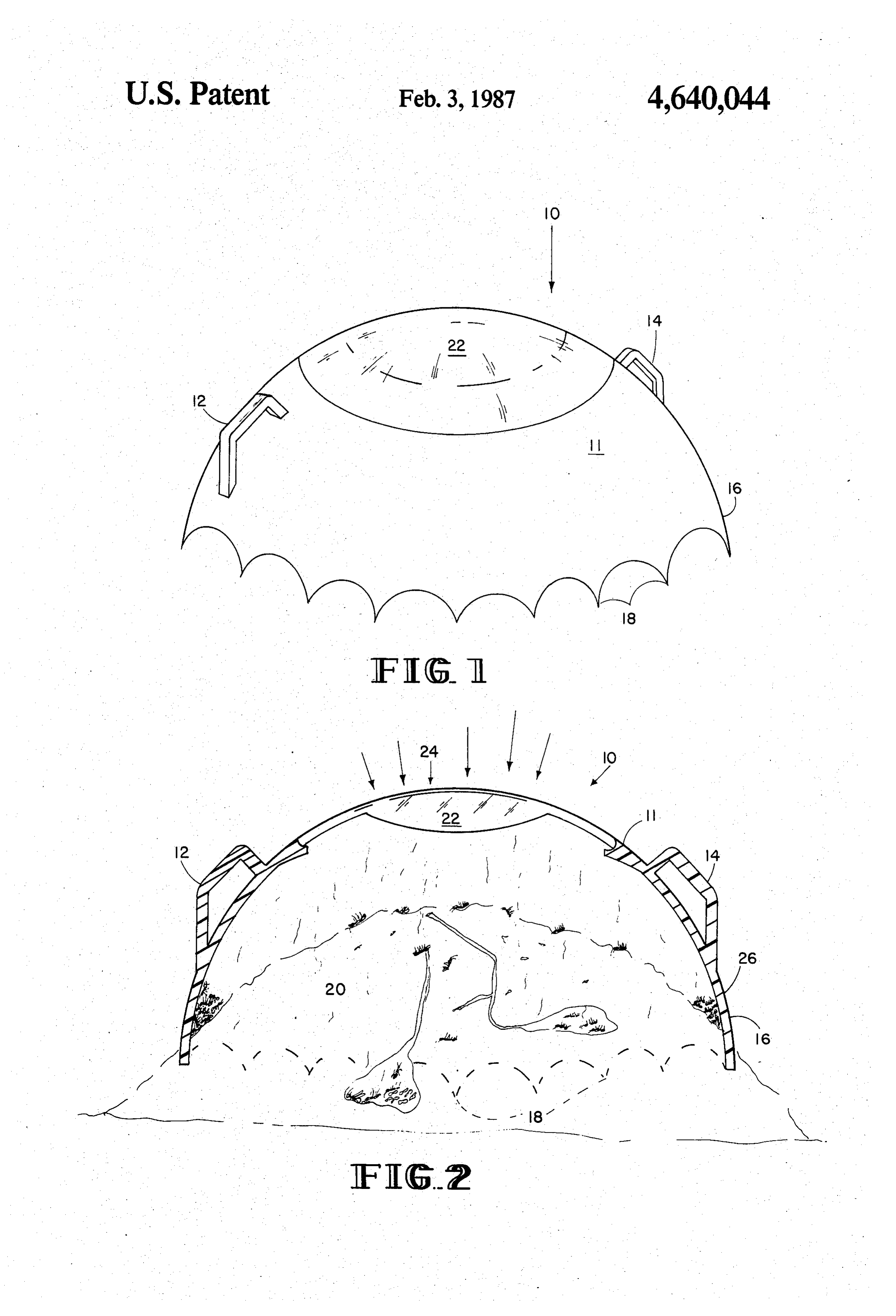
FIG. 2 is an elevational cross-section of the present a serrated edge located at said open end of said body. invention.
Page 2drawing sheetscan →
Page 3scan →
HOOD OR COVER USED TO ERADCATE FIRE DESCRIPTION OF THE PREFERRED A EMBODIMENTS
With reference now to the figures, and in particular
BACKGROUND OF THE INVENTION 5 with reference to FIG. 1, there is depicted a perspective 1. Field of the Invention of the anthood 10 of the present invention. The body of anthood 10 is made of a translucent material 11, prefer
The present invention relates to devices which may ably clear plastic or glass. Anthood 10 is generally exterminate insects, and more particularly to such de formed as a single piece.
vices using intensified solar radiation to eradicate ants. 10 With further reference to FIG. 2, the ant hood 10 2. Description of Prior Art may be conveniently set in place by use of handles 12 Most extermination means consists of poisons or pes and 14. In the preferred mode of use, the lower edge 16 ticides which are directly applied to the bothersome of the hood 10 has serrations 18 which facilitate place insect. One alternative to this is parasitic organisms, 15 ment of hood 10 about the ant mound 20. This also helps such as fire ant mites, which attach themselves to ants insure an airtight seal, and prevents any ants from escap and the queen, eventually destroying the entire nest. ing,The central portion of hood 10 comprises a convex Fire ants are a particularly menacing problem in the southwestern United States, and pesticides have been lens 22. Incoming solar radiation 24 is thereby intensi fied, raising the temperature inside hood 10 to 200' F.
found to be generally ineffective. Heretofore no device or more. Convex lens 22 may be formed as a separate has been invented which can eradicate the entire colony element and attached to base 26.
using solar radiation. The hood 10 can easily be set by anyone within thirty Devices for intensifying solar radiation are known in seconds and may be moved from one mound to another the art. Most are used for greenhouses or for generating as needed. By agitation of hood 10, serrated edge 16 heat for industrial or household purposes. Many employ 25 may cut through grass, weeds and soil. The excessive the use of a convex lens, such as that shown in U.S. Pat. heat created by the hood will dehydrate the mound in No. 612,675, issued to Rieke, which is directed to insect one or two days, thus killing the ants, larvae, eggs, and extermination. the queen. As one skilled in the art can appreciate, the The obvious disadvantage of the Rieke device is its hood may be formed in various sizes to accommodate cumbersome structure. In fact, most of the aforesaid 30 theAlthoughsize of ant mounds in different localities. the invention has been described with ref.
devices are extremely large and bulky, making them erence to a specific embodiment, this description is not unsatisfactory for the simple goal of destroying an ant meant to be construed in a limiting sense. Various modi mound. Moreover, the preferred device would have to fications of the disclosed embodiment, as well as alter completely seal off the mound. It would therefore be 35 native embodiments of the invention will become ap desirable to devise a hood for collecting solar radiation parent to persons skilled in the art upon reference to the which may easily be placed on an ant mound to effec description of the invention. It is therefore contem tively bake the nest. plated that the appended claims will cover such modifi
Summary of the invention
cations that fall within the true scope of the invention.
claim
Accordingly, the primary object of the present inven 1. An anthood for destroying ants in a mound, con tion is to provide an anthood which may be placed over prising:
an ant mound and raise the heat therein sufficiently to a body having an open end, defining an inner cavity, kill the ants. said open end having a lower edge; Another object of the invention is to provide such an 45 means attached to said body for intensifying solar ant hood which may be easily transported and posi radiation, thereby raising the temperature within said inner cavity;
tioned into place. handle means attached to said body; and Yet another object of the invention is to provide a cutting means attached to said lower edge for facili means by which the ants so entrapped will not be able to 50 tating insertion of said lower edge into the ground escape. surrounding said mound. The foregoing objects are achieved in an anthood 2. An ant hood as recited in claim 1 wherein said having a central convex dome, a pair of side handles, intensifying means comprises a convex lens. and a serrated lower edge. 3. An ant hood as recited in claim 1 wherein said 55 cutting means comprises a serrated edge.
BRIEF DESCRIPTION OF THE DRAWINGS 4. An ant hood as recited in claim 3 wherein said The novel features believed characteristic of the in intensifying means comprises a convex lens. vention are set forth in the appended claims. The inven prising: 5. An anthood for destroying ants in a mound, com tion itself, however, as well as a preferred mode of use, a translucent body having a central portion incorpo further objects and advantages thereof, will best be rating a solar radiation intensifying means, a base, understood by reference to the following detailed de an outer surface, and an open end; scription of illustrative embodiments when read in con said central portion of said body having a convex junction with the accompanying drawings wherein: shape; - FIG. 1 is a perspective of the anthood of the present 65 at least one handle attached to said outer surface of invention. said body;
FIG. 2 is an elevational cross-section of the present a serrated edge located at said open end of said body. invention.
Provenance
- Collection
- Patents citing this work
- Pages
- 3
- Method
- pdftotext (the PDF's own text layer) + pdftoppm 300dpi page scans
- Patent office record
- patents.google.com →
- Source
- Google Patents citing-documents table
- Assignee
- Varnon James W
- Published
- 1987-02-03
- Transcribed from
- patentimages.storage.googleapis.com →