

The 2008 cache, set three: the VIC cabinet
Five photographs from 2008, published here first: Stan Meyer's eleven-channel VIC cabinet, one card per cell, lifted out of its case, and the Hydrogen Fracturing Process console beside it.
The archive's own copy, 25 November 2026 8 MB
0 views
0 watched live
0 at once
What was shown
-
Document
Stan and Stephen Meyer on the gas management system, transcribed The Meyers' bench tape, at 27:41: "This is the VIC cabinet itself… we have up to 11 channels that plug into the VIC unit."
-

Stan Meyer's water buggy had a computer: the Gas Management System The Gas Management System the cabinet takes its gating signal from, in sixty seconds.
-

Stan Meyer said he built this for US patent law: his 11-card water fuel cell rack The same rack and console in one more 2008 photograph, and why Stan said it was built.
-

The 2008 cache, set two: the Heat Resonator Set two: the Heat Resonator, the machine the Steam Resonator card is named for.
-
Document
Hydrogen Fracturing Process The Hydrogen Fracturing Process, in Stan's own words, the name on the console's face.
-

Episode 16: The Fracturing Episode 16: how the Hydrogen Fracturing Process is meant to work.
-
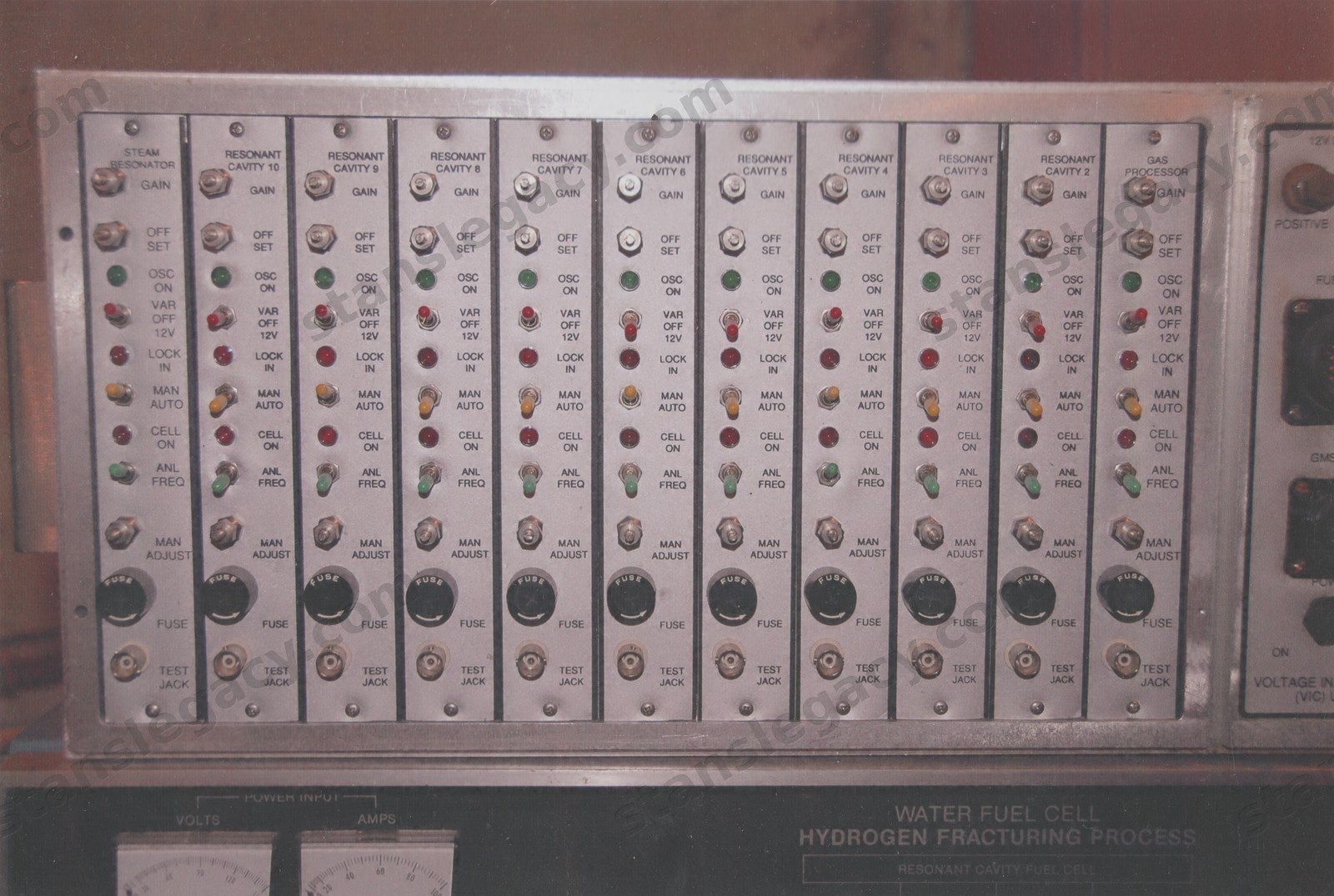
Eleven cards The cabinet straight on. Left to right: Steam Resonator, Resonant Cavity 10 down to 2, Gas Processor. Under it, the console's lettering: Water Fuel Cell, Hydrogen Fracturing Process.
-
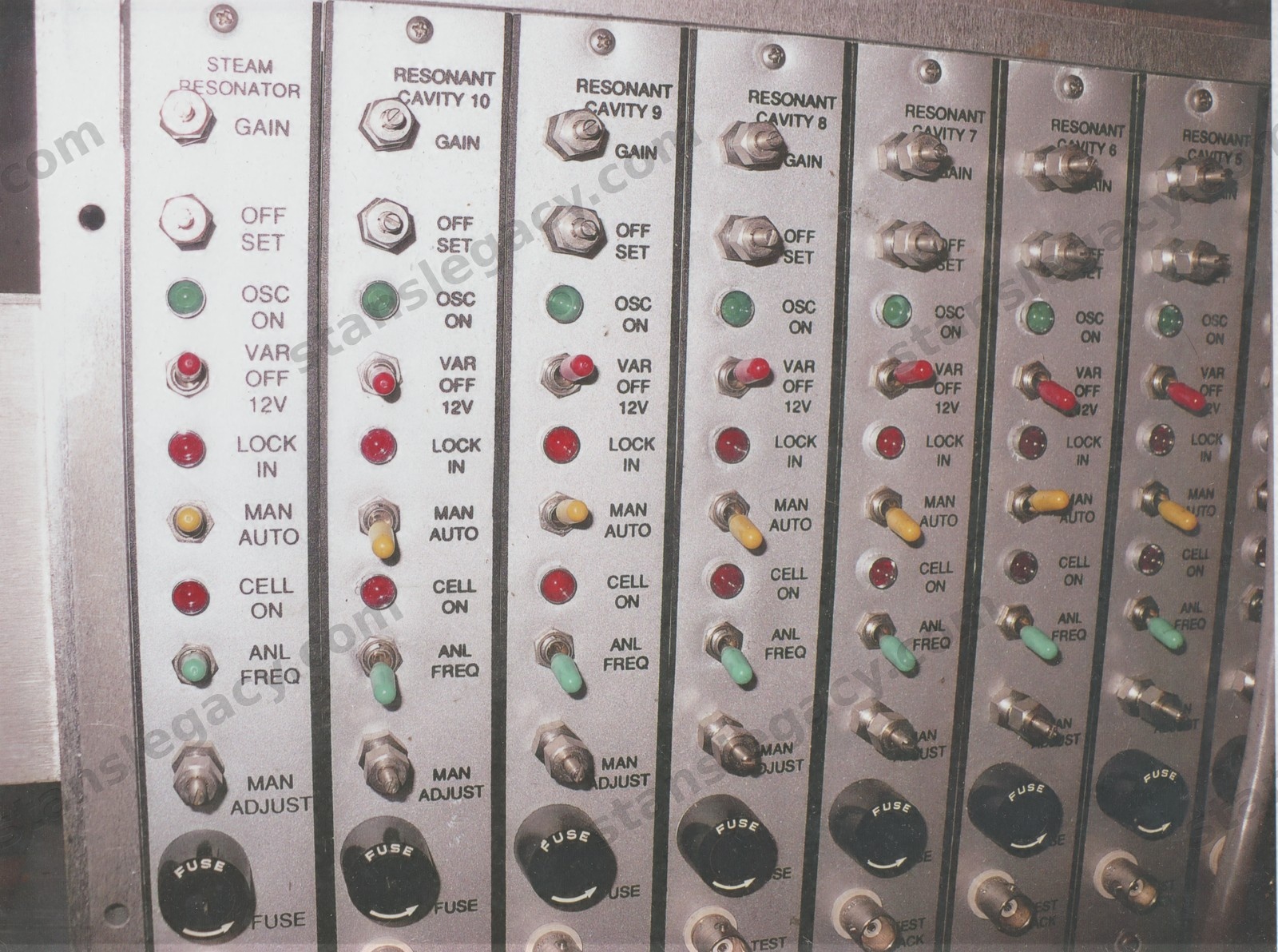
The Steam Resonator channel The first card reads Steam Resonator: the heater in set two had a channel of its own. Every card carries the same controls: Gain, Off Set, Osc On, Var/Off/12V, Lock In, Man/Auto, Cell On, Anl Freq.
-
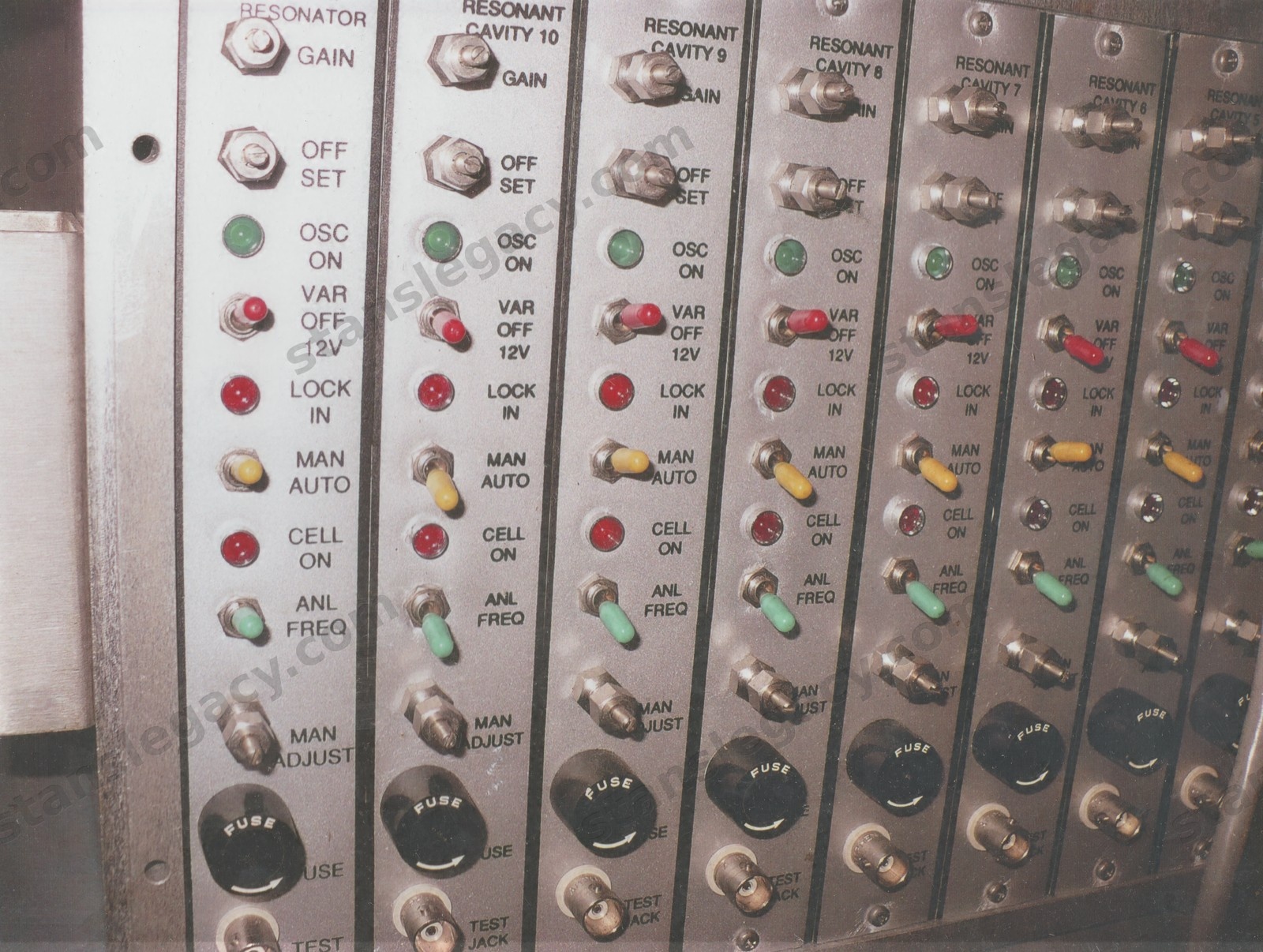
Find it, lock it Three lamps on every card. On the Meyers' tape: Osc On blinks while the oscillator runs, Cell On means the cell is working, and Lock In means the card has found the cell's resonance.
-
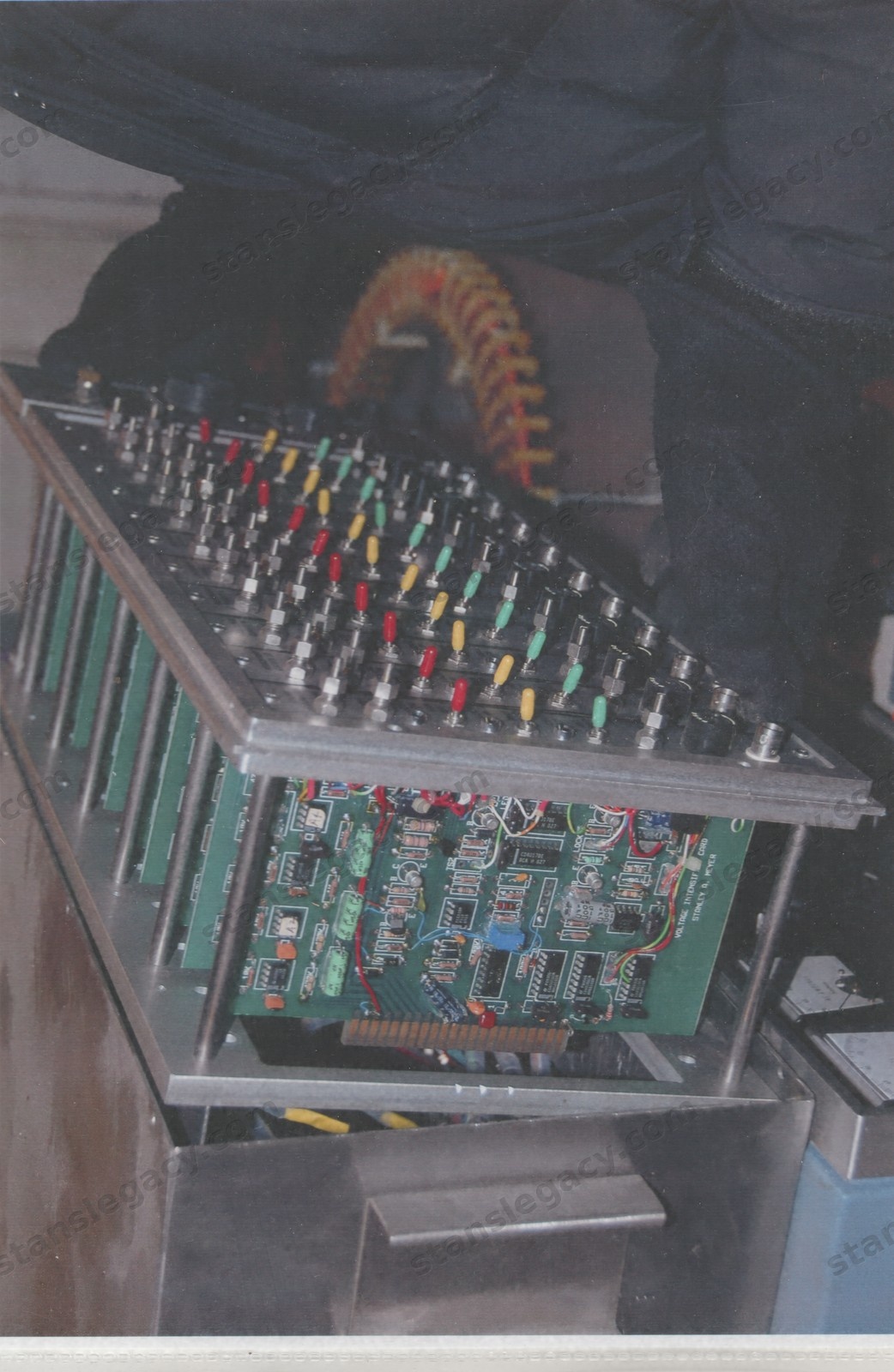
Lifted out A rack of the same cards out of its stainless case, the faces turned up. The board underneath is printed Voltage Intensifier Card · Stanley A. Meyer.
-
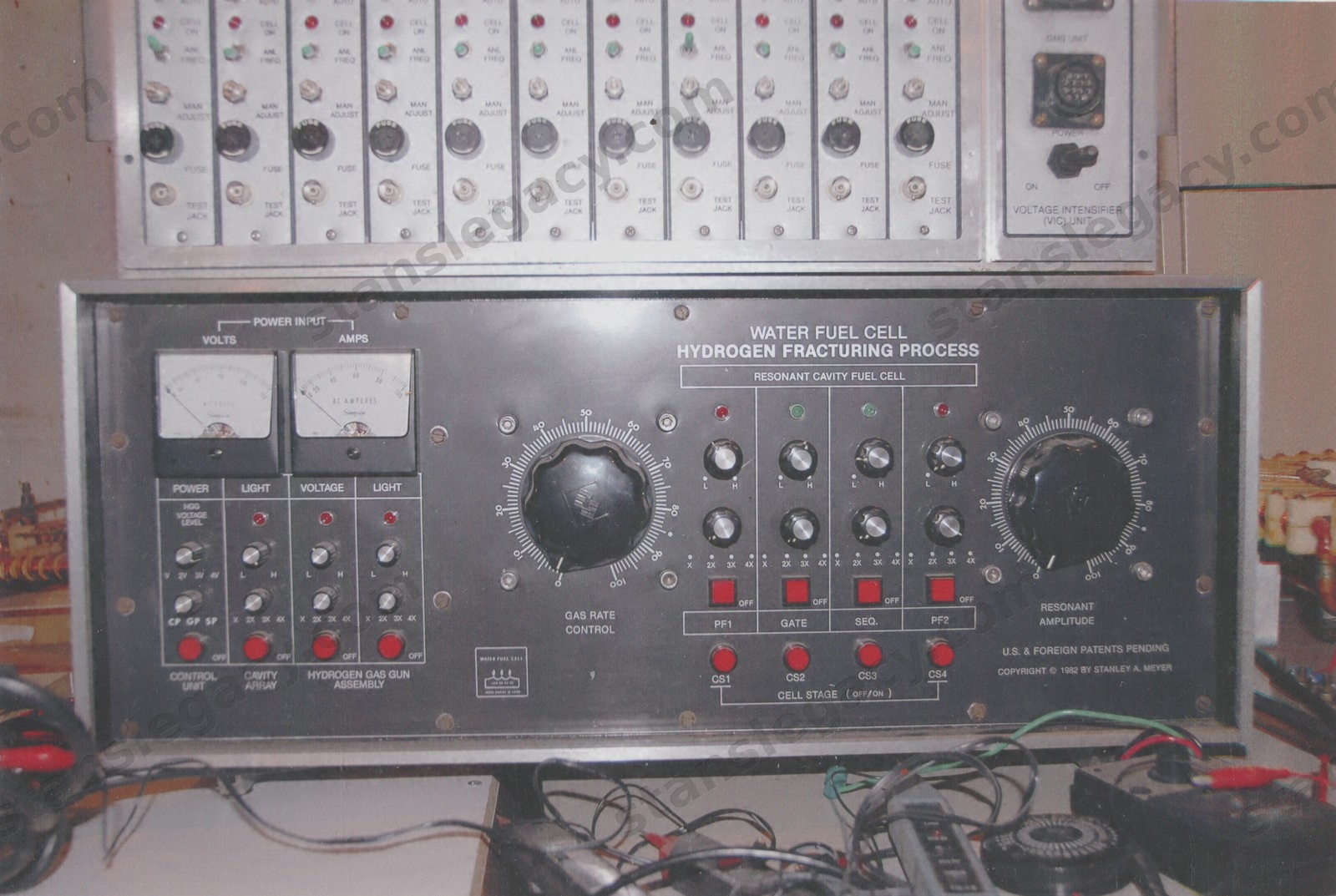
Hydrogen Fracturing Process PF1, Gate, Seq. and PF2; four Cell Stage switches; Gas Rate Control, Resonant Amplitude, Hydrogen Gas Gun Assembly. "Copyright © 1982 by Stanley A. Meyer".
Set three of the 2008 cache. Five photographs taken in David Holbrook's basement in 2008, before the estate sale broke the collection up, and published here for the first time. A new set goes up every month.
David is the son of Charlie Holbrook, Stan Meyer's friend and his assistant in the mid-1980s, and one of the names on the archive's register of the people who knew him.
The VIC cabinet
This set is one piece of equipment and the console that stood with it. The cabinet holds eleven plug-in cards, one channel each. Left to right their faces read Steam Resonator, Resonant Cavity 10 down to Resonant Cavity 2, and Gas Processor. A panel at the right-hand end is labelled "Voltage Intensifier (VIC) Unit", with a power switch and a round socket marked "GMS Unit".
The Meyers walk through a cabinet built this way on their bench tape about the gas management system (transcribed on the site). At 27:41: "This is the VIC cabinet itself. And you'll notice that the way this is designed is that we have the channels that plug in. And we have up to 11 channels that plug into the VIC unit. Now the power and the control signals are controlled by this panel over here on the right. We have an on-off switch and this is the jack that controls the gating signal from the GMS unit that goes into each of these channels itself." The two voices on that tape are Stan's and his twin Stephen's, and they cannot be told apart, so the archive credits the words to both.
The same tape explains the lamps on every card: a blinking light for the oscillator, a cell-on light when the cell is working, and a lock light "so that when it does capture that resonant frequency, the light will be on, indicating that we're locked on the water cell". Each card scans for its own cell's resonance and holds it, which is why there is one card per cell.
What is in this set
- Eleven cards. The cabinet straight on, every channel in view, with the console's lettering showing underneath.
- The Steam Resonator channel. The first card is labelled Steam Resonator: the heater from set two had a channel of its own. Every card carries the same controls: Gain, Off Set, Osc On, Var/Off/12V, Lock In, Man/Auto, Cell On and Anl Freq.
- Find it, lock it. The same cards framed lower: the three lamps (Osc On, Lock In, Cell On), then Man Adjust, a fuse and a test jack on every channel.
- Lifted out. A rack of the same cards lifted out of its stainless case, the card faces turned upward, so one board shows underneath. It is printed "VOLTAGE INTENSIFIER CARD / STANLEY A. MEYER". On the gas management tape the Meyers close a cased rack like this and set it into the buggy.
- The console. "WATER FUEL CELL / HYDROGEN FRACTURING PROCESS". Power-input meters for volts and AC amperes; a Resonant Cavity Fuel Cell section with PF1, Gate, Seq. and PF2 and four Cell Stage switches; Gas Rate Control and Resonant Amplitude dials; Control Unit, Cavity Array and Hydrogen Gas Gun Assembly controls. The face reads "U.S. & Foreign Patents Pending / Copyright © 1982 by Stanley A. Meyer". Above it sits the VIC Unit panel with its GMS Unit socket.
The 1982 date is printed on the console. It does not date the cabinet.
What the Hydrogen Fracturing Process is meant to do, in Stan's own words, is on the site, and episode 16 works through it. Another photograph of this rack and console together is in the short Built for patent law.
Help wanted
If you built, wired or tested the VIC cabinet or the Hydrogen Fracturing console, or you hold circuit drawings for the Resonant Cavity cards, the archive would like to hear from you.
Rights
© 2026 Stan's Legacy. All rights reserved. Ask before republishing, and credit the archive. The mark is drawn on the pixels and the same credit is written into each file.
photographs photo-drop 2008-cache vic resonant-cavity hydrogen-fracturing