(45)
Voltage zones surface area
Also written Electrical Voltage Zones · voltage zones · surface area · Resonant Cavity Inner Surface · Resonant Cavity Assembly · voltage zone · inductive
Where it is first named
Resonant Cavity Inner Surface (45) (forming a Positive Electrical Voltage Zone),
How it is written
- (44/45) 4× with (44) Electrical Voltage Zones
- (45) 3×
- (43/45) 1× with (43) Resonant Charging Choke
Drawings 2
-
Electrical Voltage Zones (44/45) · Dual Voltage Resonant "Q" - Part 2
-
The figure it sits on · DUAL VOLTAGE RESONANT "Q"
Where it is named · 8
DUAL VOLTAGE RESONANT "Q" 4×
-
Resonant Cavity Inner Surface (45)
Resonant Cavity Inner Surface (45) (forming a Positive Electrical Voltage Zone),
-
Voltage zones surface area (44/45)
Voltage zones surface area (44/45) form the Capacitance value of said Resonant Cavity Assembly (4) of Figure 12. Natural Water inside said Resonant Cavity Assembly (44/45) provides the dielectric value between said voltage zones (44/45), resonant charging choke (47) to electrical ground forms and completes the Voltage Intensifier Circuit 9XA as to 20YA.
-
Resonant Cavity Assembly (44/45)
Voltage zones surface area (44/45) form the Capacitance value of said Resonant Cavity Assembly (4) of Figure 12. Natural Water inside said Resonant Cavity Assembly (44/45) provides the dielectric value between said voltage zones (44/45), resonant charging choke (47) to electrical ground forms and completes the Voltage Intensifier Circuit 9XA as to 20YA.
-
voltage zones (44/45)
Voltage zones surface area (44/45) form the Capacitance value of said Resonant Cavity Assembly (4) of Figure 12. Natural Water inside said Resonant Cavity Assembly (44/45) provides the dielectric value between said voltage zones (44/45), resonant charging choke (47) to electrical ground forms and completes the Voltage Intensifier Circuit 9XA as to 20YA.
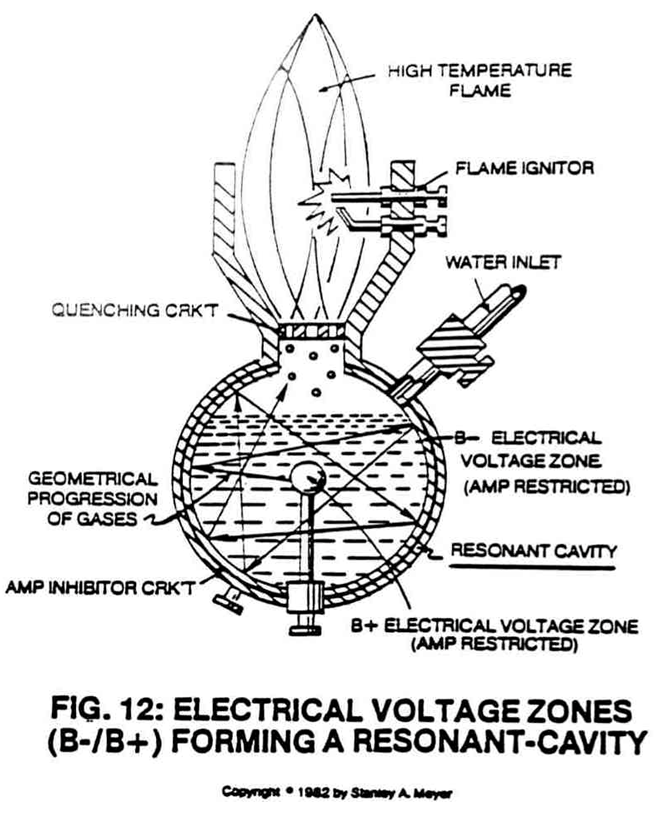
Dual Voltage Resonant "Q" - Part 2 4×
-
surface area (45)
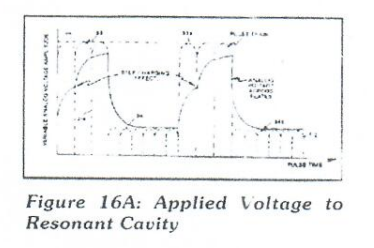
Said High Voltage Output from said Resonant Charging Choke (43) forms a Positive Electrical Voltage Pulse Potential (voltage zone) across surface area (45) immersed in natural water, see step-charging graph 16A as to 20YA Section AA again.
-
voltage zone (45)
Scientific Fact: Stainless Steel Material T304 forming said voltage zone (45) does NOT chemically interact with liberated hydrogen, oxygen, and ambient air gases in natural water when exposed to a voltage potential during amp restrictions.