

(650)
Capacitance Charging Effect
Also written Electrical Charging Effect
Where it is first named
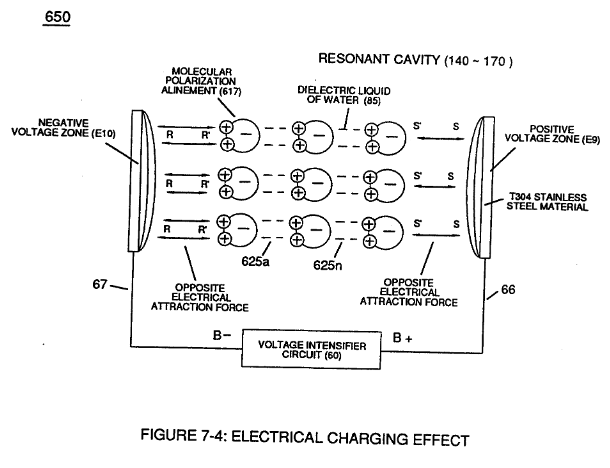
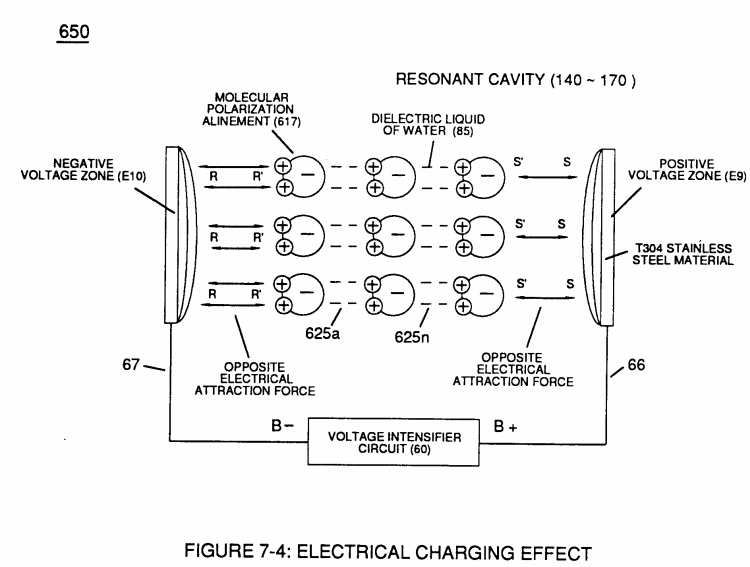
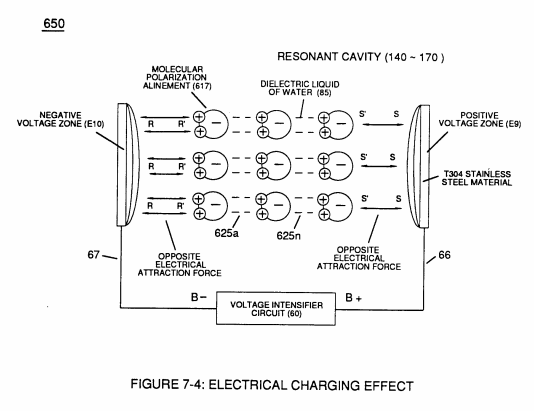
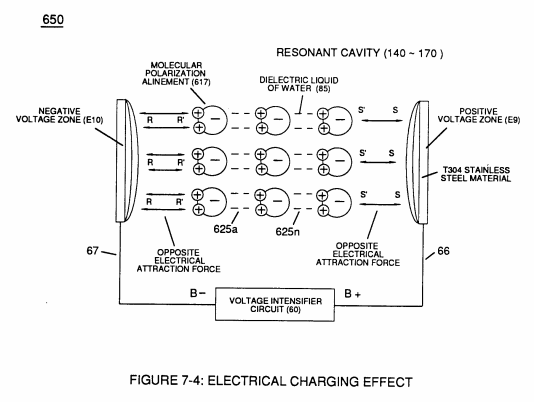
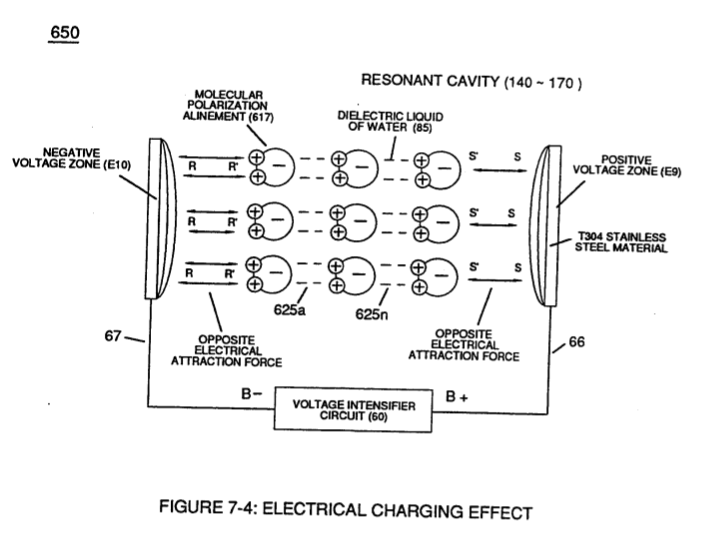
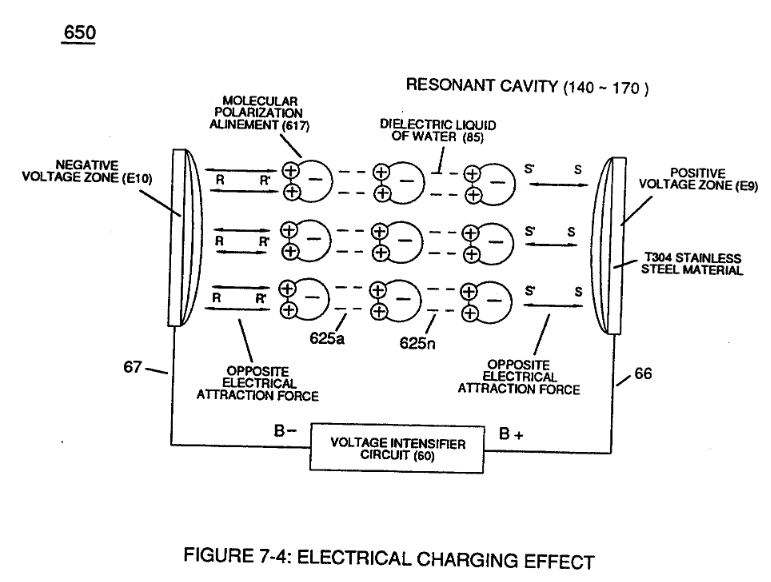
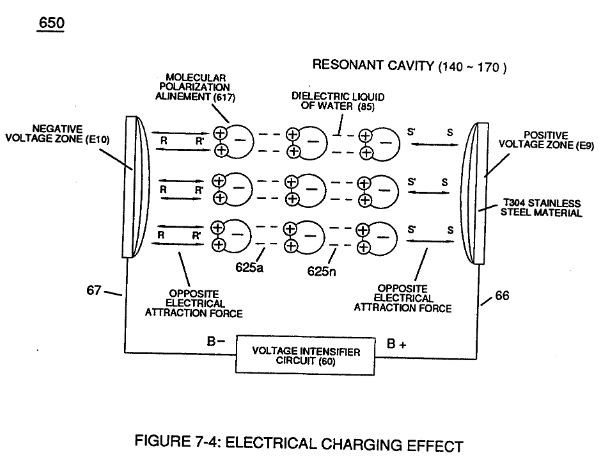
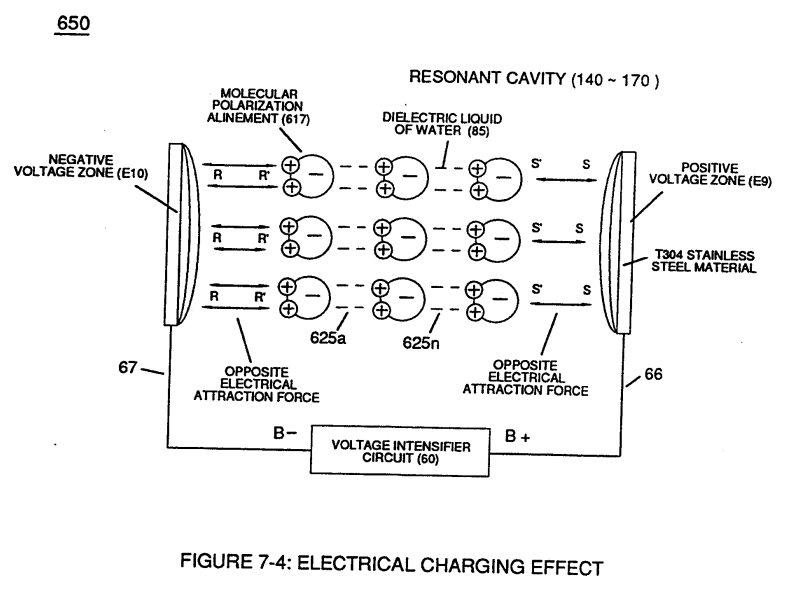
Pulse-Voltage repetition rate sets up the step-up electrical charging effect (Figure 1-3) since the "Resonant Cavity" functions as a Capacitor ER) due to the dielectric value (Resistance to amp flow) of water which becomes an integral part for the VIC Circuit, as so illustrated in (650) of Figure (7-4).
How it is written
- (650) 21×
Drawings 12
-
(650) of Figure (7-4) · Amp Inhibiting Circuit Vs Voltage Enhancement
-
(650) of Figure (7-4) · Resistance (Rs)
-
Carries this number · Inductance (FL)
-
(650) of Figure (7-4) · Inductance (FL)
-
(650) of Figure (7-4) · Capacitance (Cd)
-
"Voltage Deflection" of Figure (7-4) · Capacitance Reactance
-
Opposite Electrical Attraction Force (SS' ~ 617 ~ RR' - T3 - SS' ~ 617 - RR') of Figure (7-4) · Electron Bounce Phenomenon
-
Carries this number · WFC 426 - Illustrations
-
Carries this number · 8-2 - Traveling Voltage Wave-Guides
-
(650) of Figure (7-4) · 8-4 - State Space (Sp)
-
(650) of Figure (7-4) · 8-6 - VIC Voltage Sync-Pulse Circuit
-
Carries this number · Propagating Electrical Stress
Where it is named · 21
Amp Inhibiting Circuit Vs Voltage Enhancement 2×
-
Pulse-Voltage repetition rate sets up the step-up electrical charging effect (Figure 1-3) since the "Resonant Cavity" functions as a Capacitor ER) due to the dielectric value (Resistance to amp flow) of water which becomes an integral part for the VIC Circuit, as so illustrated in (650) of Figure (7-4).
-
(650) of Figure (7-4)
Resistance (Rs) 2×
-
... releasing thermal explosive energy (gtnt) (16) of Figure (4-5) on demand from natural water (85) of Figure (3-26) since the dielectric value (Re) of (Eq.9) of Water Fuel (85) is further approximated in Capacitance Equation (Eq.22), as illustrated in (650) of Figure (7-4) as to Tapered Voltage Wave-Guide (720) of Figure (7-11)
-
(650) of Figure (7-4)
Inductance (FL) 4×
-
(650) of Figure (7-4)
-
... interacting Distributed Capacitance (Cda xxx Cdn) and Distributed Inductance (D1a xxx D1n) of Figure (7-3) of Inductor Coil (614) of (7-1) with "Electrical Charging Effect" brought on by the dielectric value of water bath (85/Re), as pictorially illustrated in (650) of Figure (7-4).
-
(650) of Figure (7-4)
Capacitance (Cd) 7×
-
Capacitor (E9/E10) of Figure (7-1) as to Figure (650) of Figure (7-4) in direct relationship to Water Gap (616) becomes Taper Resonant Cavity (720) of Figure (7-11) as shown in (590) of Figure (6-2) since Water Gap (616) is occupied by a dielectric liquid (Re) as herein before identified as natural water (85) having no electrolyte added thereto
-
Figure (650) of Figure (7-4)
-
... a resistive liquid (having an ohmic value of 78.54 ohms) that takes on an "Electrical Charge" when applied voltage Potential (66/67) of Figure (7-1) as to (650) of Figure (7-4) causes and sets up Molecular Polarization Alignment (617) of Figure (7-4) by way of electrical molecular rotation (opposite electrical attraction force to rotate and position particle alignment) of each water Molecule (85a - 85b - 85c - 85n). …
-
(650) of Figure (7-4)
-
(650) of Figure (7-4)
8-4 - State Space (Sp) 2×
-
During the electrical-formation (66- Vpa/Vpb - 67- Vpa/Vpb) of each opposite Electrical Voltage-Wave (66-583 - 67-602), opposite electrical attraction force (RR' - SS') of Figure (7-4) is produced across water cap (Cp) of Figure (7-8) which, now, sets up and defines the conditions of “State Space," as illustrated in (770 A/B) of Figure (8-1) as to (650) of Figure (7-4).
-
(650) of Figure (7-4)
8-6 - VIC Voltage Sync-Pulse Circuit 2×
-
(650) of Figure (7-4)
Propagating Electrical Stress 1×
VIC Switchover Circuit 1×
-
The resultant pulsating electrical stress (S-S' /R-R) penetrates the liquid bath of water since the water bath takes on an electrical charge when the rotational spin (1019) of the water molecule (s) occurs to bring about bipolar alignment of the water molecule comprising water bath (68) during each and every reversing voltage pulsing cycle (B+/O - B-/O - OIB+ - OIB-), as so illustrated in (650) of Figure (7-4).