

article
The equations of The Birth of New Technology, typed
24 September 2026
The equations of The Birth of New Technology
Every numbered equation in Stanley Meyer's Water Fuel Cell Technical Brief, The Birth of New Technology, typed out, with the printed equation beside it, where it is printed, and how it compares with the textbook form.
In the archive's chapters of the Brief, every equation is a picture with no text. The chapters read "is given by (Eq 1)" and then show an image, so a search for "Wheeler" or "½ L I²" finds nothing, and a screen reader skips them. This page is the text those pictures are missing.
There are thirty-two numbered equations. Memo WFC 420 prints Eq 1 to 17; memo WFC 422DA reprints the same seventeen, and so does WFC 418 on this site. WFC 423DA has Eq 18, WFC 426 has Eq 19 to 30 and repeats Eq 9, and WFC 424 has Eq 31 and 32. The page numbers are the memos' own.
For a builder, the short version: twenty-seven of the thirty-two are standard textbook formulas, stated correctly, and several are the ones you need to design a VIC: the resonant frequency (Eq 4), the voltage across the cell near resonance (Eq 7), Wheeler's coil formula (Eq 20), the cell's capacitance (Eq 21) and the transformer relations (Eq 25 to 30). Five need a note, given with each: Eq 9 (water's dielectric constant used as a resistance), Eq 17 (no equals sign; it gives a current), Eq 18 (Meyer's own relation), Eq 19 (a probable misprint of ½ L I²) and Eq 28 (a term left out).
The equations were located by a Docling and pix2tex pass over a 222-page scan of the Brief, and every one has been read again by eye against its page; the machine readings are not reproduced. The pictures are cropped from that scan.
| Eq | What it is | As printed | Where |
|---|---|---|---|
| Eq 1 | Impedance of the LC circuit | Zseries = (Xc − Xl) | WFC 420, page 1-2 |
| Eq 2 and 3 | Capacitive and inductive reactance | Xc = 1 / (2π f c) Xl = 2π f l | WFC 420, page 1-2 |
| Eq 4 | Resonant frequency | F = 1 / (2π √(LC)) | WFC 420, page 1-2 |
| Eq 5 | Ohm's law for the LC circuit | Vt = I Z | WFC 420, page 1-2 |
| Eq 6 | Voltage across the inductor | Vl = Vt Xl / (Xl − Xc) | WFC 420, page 1-3 |
| Eq 7 | Voltage across the capacitor | Vc = Vt Xc / (Xl − Xc) | WFC 420, page 1-3 |
| Eq 8 | Impedance of the RLC circuit | Z = √(R1² + (Xl − Xc)²) | WFC 420, page 1-4 |
| Eq 9 | Total circuit resistance | Z = R1 + Z2 + Z3 + RE | WFC 420, page 1-4; again in WFC 426, page 7-10 |
| Eq 10 | Ohm's law | E = I R | WFC 420, page 1-4 |
| Eq 11 | Electrical power | P = E I | WFC 420, page 1-4 |
| Eq 12 | Newton's second law | A = F / M | WFC 420, page 1-5 |
| Eq 13 | Coulomb's law | F = q q′ / R² | WFC 420, page 1-6 |
| Eq 14 | Potential of a charge in a medium | V = q / (e R) | WFC 420, page 1-6 |
| Eq 15 | LED series resistor | Rs = (Vin − Vled) / Iled | WFC 420, page 1-8 |
| Eq 16 | Power in the LED array | Pwatts = Vcc It | WFC 420, page 1-8 |
| Eq 17 | Light intensity under pulsing | Le √((ION)² × T1 / (T1 + T2)) | WFC 420, page 1-9 |
| Eq 18 | Energy Gas Detonation Equation | Ein =gasdet Md C² (thermal explosive energy, gtnt) | WFC 423DA, page 4-3 |
| Eq 19 | Energy stored in the inductor | Wa = L I² / Z | WFC 426, page 7-6 |
| Eq 20 | Multilayer coil inductance | L = 0.8 (N × A)² / (6A + 9B + 10C) (bobbin cavity) | WFC 426, page 7-7 |
| Eq 21 | Capacitance of the water cell | C = 0.2249 e A / (d Eo) picofarads | WFC 426, page 7-8 |
| Eq 22 | Surface area of the taper cavity | area (A) = (h / 2)(a + b) (taper resonant cavity) | WFC 426, page 7-9 |
| Eq 23 | Circumference | Circumference Surface Point (E9) = π D | WFC 426, page 7-9 |
| Eq 24 | Component reactance | Z = XL − Xc | WFC 426, page 7-10 |
| Eq 25 | Transformer ratios | Ep / Es = Np / Ns and Ep / Es = Is / Ip | WFC 426, page 7-11 |
| Eq 26 | Turns ratio | T = Ns / Np | WFC 426, page 7-12 |
| Eq 27 | Impedance ratio | Z = T² | WFC 426, page 7-12 |
| Eq 28 | Mutual inductance | M = La / 4 | WFC 426, page 7-12 |
| Eq 29 | Coupled coils in parallel | Lt = 1 / (1/(L1 + M) + 1/(L2 + M)) (transformer) | WFC 426, page 7-13 |
| Eq 30 | Choke coils in series | Lt cc = L1 + L2 + 2M (choke coils) | WFC 426, page 7-13 |
| Eq 31 | Energy of a photon | E = h ν | WFC 424, page 5-6 |
| Eq 32 | Momentum of a photon | h ν / c | WFC 424, page 5-6 |
Eq 1: Impedance of the LC circuit
Zseries = (Xc − Xl)
Printed: WFC 420, page 1-2, in the chapter LC Circuit.
Meyer's terms: The impedance of an inductor and a capacitor in series.
In the textbooks: The standard series reactance, usually written XL − XC; the order only changes the sign. At resonance the two cancel and it is zero, which is why Eq 6 and Eq 7 grow without limit.
Eq 2 and 3: Capacitive and inductive reactance
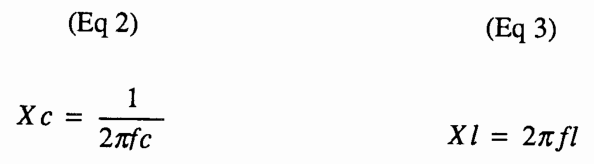Xc = 1 / (2π f c) Xl = 2π f l
Printed: WFC 420, page 1-2, in the chapter LC Circuit.
Meyer's terms: The two reactances that Eq 1 subtracts.
In the textbooks: Standard, printed with a lower-case c and l for the capacitance and the inductance.
Eq 4: Resonant frequency
F = 1 / (2π √(LC))
Printed: WFC 420, page 1-2, in the chapter LC Circuit.
Meyer's terms: The resonant frequency (F) of an LC circuit in series.
In the textbooks: Standard.
Eq 5: Ohm's law for the LC circuit
Vt = I Z
Printed: WFC 420, page 1-2, in the chapter LC Circuit.
Meyer's terms: Ohm's law for an LC circuit in series.
In the textbooks: Standard: Ohm's law with impedance in place of resistance.
Eq 6: Voltage across the inductor
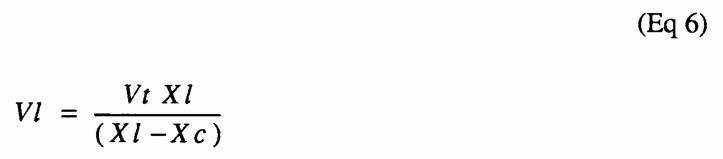Vl = Vt Xl / (Xl − Xc)
Printed: WFC 420, page 1-3, in the chapter LC Voltage.
Meyer's terms: The voltage (VL) across the inductor (C).
In the textbooks: Standard for a lossless series LC: the current times the inductor's reactance. As the text says, it becomes infinite at resonance in theory. What keeps it finite in practice is resistance (Eq 8); the ratio of the resonant voltage to the applied voltage is the circuit's Q.
Eq 7: Voltage across the capacitor
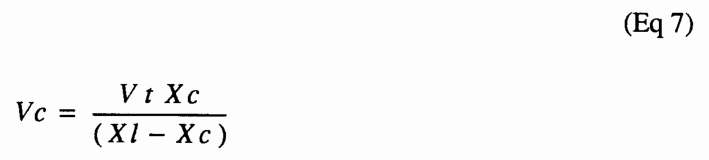Vc = Vt Xc / (Xl − Xc)
Printed: WFC 420, page 1-3, in the chapter LC Voltage.
Meyer's terms: The voltage (VC) across the capacitor, here the water cell (ER).
In the textbooks: Standard, the capacitor's counterpart of Eq 6. This is the equation behind the voltage intensifier: near resonance the cell sees many times the applied voltage.
Eq 8: Impedance of the RLC circuit
Z = √(R1² + (Xl − Xc)²)
Printed: WFC 420, page 1-4, in the chapter RLC Circuit.
Meyer's terms: The inductor (C) is wound of resistive wire to restrict D.C. current further.
In the textbooks: Standard series RLC impedance. The resistance carries the same subscript as the pickup coil's R1 in Eq 9, though the sentence before it names the choke's wire R2.
Eq 9: Total circuit resistance
Z = R1 + Z2 + Z3 + RE
Printed: WFC 420, page 1-4; again in WFC 426, page 7-10, in the chapter VIC Resistance.
Meyer's terms: R1 is the pickup coil's wire; in WFC 426, Z2 and Z3 are the two stainless steel chokes (typically 11.6 kΩ each), and RE the water, "typically 78.54 Ω". WFC 420 calls RE "the dielectric constant of natural water".
In the textbooks: A straight sum is right for resistances; the textbooks add the reactive parts with their phase, as Eq 8 does. The figure 78.54 is water's dielectric constant at 25 °C, which is a ratio with no unit. The resistance the water actually adds is set by its conductivity and the cell's shape, and it is worth measuring rather than assuming.
Eq 10: Ohm's law
E = I R
Printed: WFC 420, page 1-4, in the chapter VIC Resistance.
Meyer's terms: Ohm's law as to applied electrical power.
In the textbooks: Standard.
Eq 11: Electrical power
P = E I
Printed: WFC 420, page 1-4, in the chapter VIC Resistance.
Meyer's terms: Power (P) is a linear relationship between voltage (E) and amps (I).
In the textbooks: Standard.
Eq 12: Newton's second law
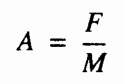A = F / M
Printed: WFC 420, page 1-5, in the chapter Voltage Performs Work.
Meyer's terms: The acceleration (A) of a particle mass (M) acted on by a net force (F).
In the textbooks: Standard.
Eq 13: Coulomb's law
F = q q′ / R²
Printed: WFC 420, page 1-6, in the chapter Voltage Performs Work.
Meyer's terms: The electrical attraction force between oppositely charged entities.
In the textbooks: Standard, in the Gaussian units of older physics texts, which have no 4πε0. In a medium the force is divided by its dielectric constant, as Eq 14 does for the potential.
Eq 14: Potential of a charge in a medium
V = q / (e R)
Printed: WFC 420, page 1-6, in the chapter Voltage Performs Work.
Meyer's terms: The potential at a distance (R) from a charge (q) in a medium whose dielectric constant is (e).
In the textbooks: Standard (Gaussian units). The R is typeset raised, as if it were an exponent; the text's own definition makes it e × R.
Eq 15: LED series resistor
Rs = (Vin − Vled) / Iled
Printed: WFC 420, page 1-8, in the chapter Laser Interaction.
Meyer's terms: Iled typically 20 mA per diode; Vled typically 1.7 V for red emitters.
In the textbooks: Standard, with standard values.
Eq 16: Power in the LED array
Pwatts = Vcc It
Printed: WFC 420, page 1-8, in the chapter Laser Interaction.
Meyer's terms: It is the forward current through the LED cluster; Vcc typically 5 V.
In the textbooks: Standard.
Eq 17: Light intensity under pulsing
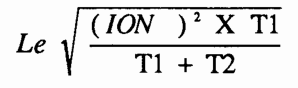Le √((ION)² × T1 / (T1 + T2))
Printed: WFC 420, page 1-9, in the chapter Laser Interaction.
Meyer's terms: Le is light intensity in watts; T1 current on-time, T2 off-time; ION the RMS load current during the on-period. Pulsed from 1 Hz to 65 Hz and above.
In the textbooks: No equals sign is printed. The expression under the root is the textbook RMS value of a current switched on for T1 and off for T2, which is ION × √(T1 / (T1 + T2)). It comes out in amperes; an LED's light output rises roughly in proportion to it, which is how the text uses it.
Eq 18: Energy Gas Detonation Equation
Ein =gasdet Md C² (thermal explosive energy, gtnt)
Printed: WFC 423DA, page 4-3, in the chapter Water Fuel Injection System.
Meyer's terms: Whenever the mass-size of a combustible gas atom is decreased (Md), thermal explosive energy-yield (gtnt) is increased (Ein) during gas detonation.
In the textbooks: Meyer's own relation, written in the form of Einstein's E = mc², with "gas / det" over the equals sign. It states his mechanism rather than giving numbers to compute with. In ordinary burning, the mass that becomes energy is about two parts in ten billion.
Eq 19: Energy stored in the inductor
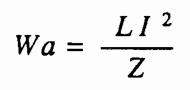Wa = L I² / Z
Printed: WFC 426, page 7-6, in the chapter In-Line Circuit Components.
Meyer's terms: Wa is the energy in joules (watt-seconds); L the inductance in henries; I the current in amperes.
In the textbooks: The textbook form is W = ½ L I² joules. The printed Z stands where the textbook has a 2, and is most likely a typesetting slip: the definitions that follow are exactly those of ½ L I², and dividing by an impedance would not give joules.
Eq 20: Multilayer coil inductance
L = 0.8 (N × A)² / (6A + 9B + 10C) (bobbin cavity)
Printed: WFC 426, page 7-7, in the chapter Multi-layer Coil.
Meyer's terms: L in microhenries; N the number of turns; A the mean radius, B the length and C the depth of the coil, all in inches.
In the textbooks: Standard: Wheeler's formula for a multilayer coil, in the same units. Each bobbin cavity of the VIC is wound to it (WFC 426, page 7-12).
Eq 21: Capacitance of the water cell
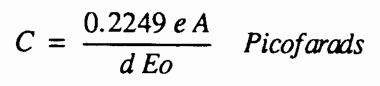C = 0.2249 e A / (d Eo) picofarads
Printed: WFC 426, page 7-8, in the chapter Taper Resonant Capacitor (ERt).
Meyer's terms: A the surface area of the plates, d the distance between them in inches; the ratio e/Eo is the dielectric constant of water.
In the textbooks: Standard: the parallel-plate formula in inch units, C = 0.2249 K A / d pF, with A in square inches and K the dielectric constant. Since Meyer defines e/Eo as that constant, his form is the same one. For water K is about 78.5.
Eq 22: Surface area of the taper cavity
area (A) = (h / 2)(a + b) (taper resonant cavity)
Printed: WFC 426, page 7-9, in the chapter Taper Resonant Capacitor (ERt).
Meyer's terms: h the length of the tapered cavity; a and b the circumferences at the exit port (E9d) and where the taper starts (E9a).
In the textbooks: The area of a trapezoid. With a and b the two circumferences it gives the side area of a tapered tube; strictly h is measured along the slope, which for a gentle taper differs little from the length.
Eq 23: Circumference
Circumference Surface Point (E9) = π D
Printed: WFC 426, page 7-9, in the chapter Taper Resonant Capacitor (ERt).
Meyer's terms: D the diameter at the designated point; π given as 3.1416.
In the textbooks: Standard.
Eq 24: Component reactance
Z = XL − Xc
Printed: WFC 426, page 7-10, in the chapter Capacitance Reactance.
Meyer's terms: The inductors (L1/L2) should always be larger than the capacitor (ER), to maximise amp restriction.
In the textbooks: Eq 1 with the terms the other way round: the net reactance of the series circuit. Keeping XL larger means working below resonance, on the inductive side.
Eq 25: Transformer ratios
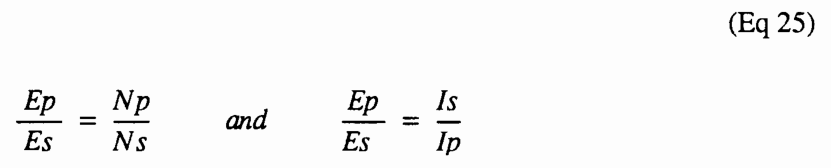Ep / Es = Np / Ns and Ep / Es = Is / Ip
Printed: WFC 426, page 7-11, in the chapter Transformer Action.
Meyer's terms: Voltages, turns and currents of the primary (26) and the secondary pickup coil (52).
In the textbooks: Standard, for an ideal transformer.
Eq 26: Turns ratio
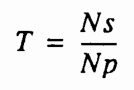T = Ns / Np
Printed: WFC 426, page 7-12, in the chapter Transformer Action.
Meyer's terms: Ns the turns of all the bobbin cavities in series; Np the primary turns.
In the textbooks: Standard.
Eq 27: Impedance ratio
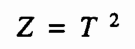Z = T²
Printed: WFC 426, page 7-12, in the chapter Transformer Action.
Meyer's terms: The impedance ratio of the VIC transformer.
In the textbooks: Standard: impedance transforms as the square of the turns ratio.
Eq 28: Mutual inductance
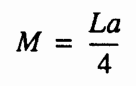M = La / 4
Printed: WFC 426, page 7-12, in the chapter Transformer Action.
Meyer's terms: M the mutual inductance; La the total inductance of primary and secondary with fields aiding.
In the textbooks: The textbook form is M = (La − Lo) / 4, where Lo is the same pair measured with the fields opposing. With both readings, this is the standard way to find M with an inductance meter: measure the two coils in series one way, reverse one, measure again.
Eq 29: Coupled coils in parallel
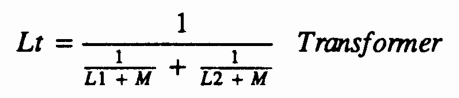Lt = 1 / (1/(L1 + M) + 1/(L2 + M)) (transformer)
Printed: WFC 426, page 7-13, in the chapter Transformer Action.
Meyer's terms: Lt the total inductance; L1 and L2 the two coils; M their mutual inductance, fields aiding.
In the textbooks: The exact textbook result for two coupled coils in parallel is (L1 L2 − M²) / (L1 + L2 − 2M). For two equal coils, the bifilar case the memo describes, that is (L + M) / 2, which is exactly what this form gives.
Eq 30: Choke coils in series
Lt cc = L1 + L2 + 2M (choke coils)
Printed: WFC 426, page 7-13, in the chapter Transformer Action.
Meyer's terms: The total inductance of the two chokes (56/62), fields aiding.
In the textbooks: Standard, for two coupled coils in series aiding.
Eq 31: Energy of a photon
E = h ν
Printed: WFC 424, page 5-6, in the chapter Solar Energy Actuator.
Meyer's terms: E the energy, h Planck's constant, printed as 6.547 × 10⁻²⁷ erg-second, ν the frequency.
In the textbooks: Standard. The accepted value of Planck's constant is 6.626 × 10⁻²⁷ erg-second.
Eq 32: Momentum of a photon
h ν / c
Printed: WFC 424, page 5-6, in the chapter Solar Energy Actuator.
Meyer's terms: The momentum of the photon in the direction of propagation.
In the textbooks: Standard. The text describes (c) as a quantum of energy; in the formula it is the speed of light.
Provenance
- Shelf
- Stan Meyer Publications
- File
- database/content/pages/the-birth-of-new-technology-equations.json
- Rights
- Equations from Stanley A. Meyer, The Birth of New Technology (Water Fuel Cell Technical Brief), memos WFC 420, 423DA, 424 and 426; the pictures are cropped from a scan of the printed pages. The typed transcriptions and the notes are the archive's.