

The Steam Resonator
Two stainless plates in a bath of natural water, and a voltage that swaps sides: the device Stan built to answer "what happens in the winter?", read from his own memos.
The archive's own copy, 15 September 2026 53 MB
9 views
0 watched live
0 at once
What was shown
-
Document
Water as Fuel Figure 13: the buggy with the steam resonator labelled beside the water tank.
-
Document
Denver 1997: the lecture, transcribed 48:02 — 'we stretch it, and then we release it'.
-
Document
Colorado Springs 1991: the full talk, transcribed 42:58 — the steam resonator, in answer to a question from the floor.
-
Document
The 1990 interview, transcribed About 12:40 — 'what happens to the water in the wintertime?'
-
Document
Global Sciences Congress, Orlando, 1992, transcribed 37:39 and 39:10 — the steam resonator on the buggy and by the water tank.
-
Document
Steam Resonator The Steam Resonator chapter of the extended dealership manual: figures 2, 32 and 32QX, and the text read in this film.
-
Document
Steam Resonator Figure 3-46 and the paragraph read in this film.
-
Document
Spin Off Technology Spin Off Technology: the steam resonator chapter, and what he meant to retrofit it to.
-
Document
Electronic Circuit Design Figure 4-13, Steam Resonator Circuit, in the Electronic Circuit Design chapter of memo WFC 423DA.
-
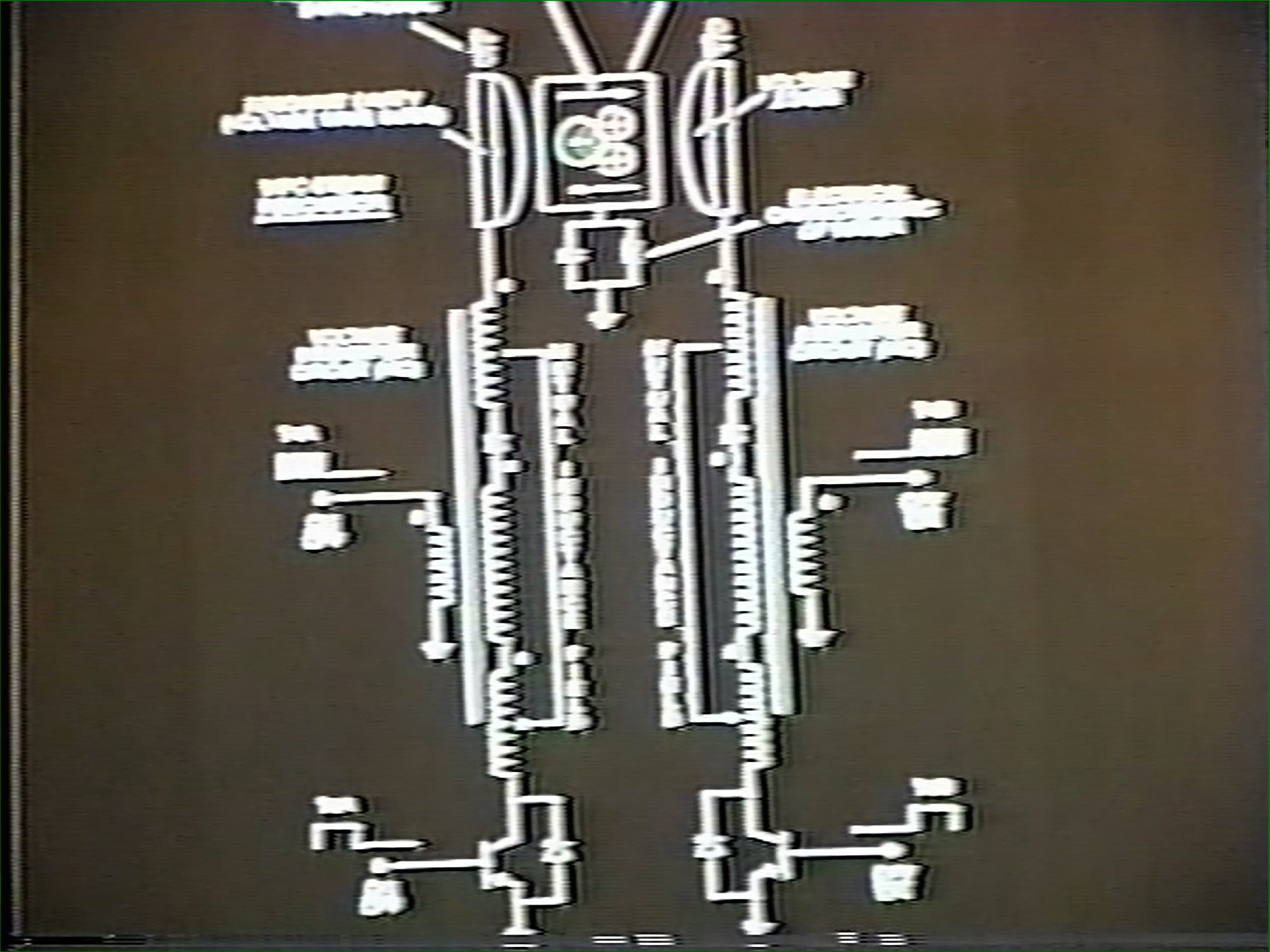
Electrical schematic for steam resonator The drive, as a slide from the estate.
-
Document
Electrical Crossover Switching Circuit Figure 11-7 and the closing sentence of memo WFC 430.
-
Document
Different polarity firing sequences for electrodes in the steam generator as found in Stan Meyer's literature Every firing sequence the memos draw, side by side.
-
Document
Particle Oscillation as a Energy Generator Memo WFC 430: particle oscillation as an energy generator.
-
Document
Steam Resonator Assembly Figures 13-1 to 13-7: the assembly and every part of it.
-
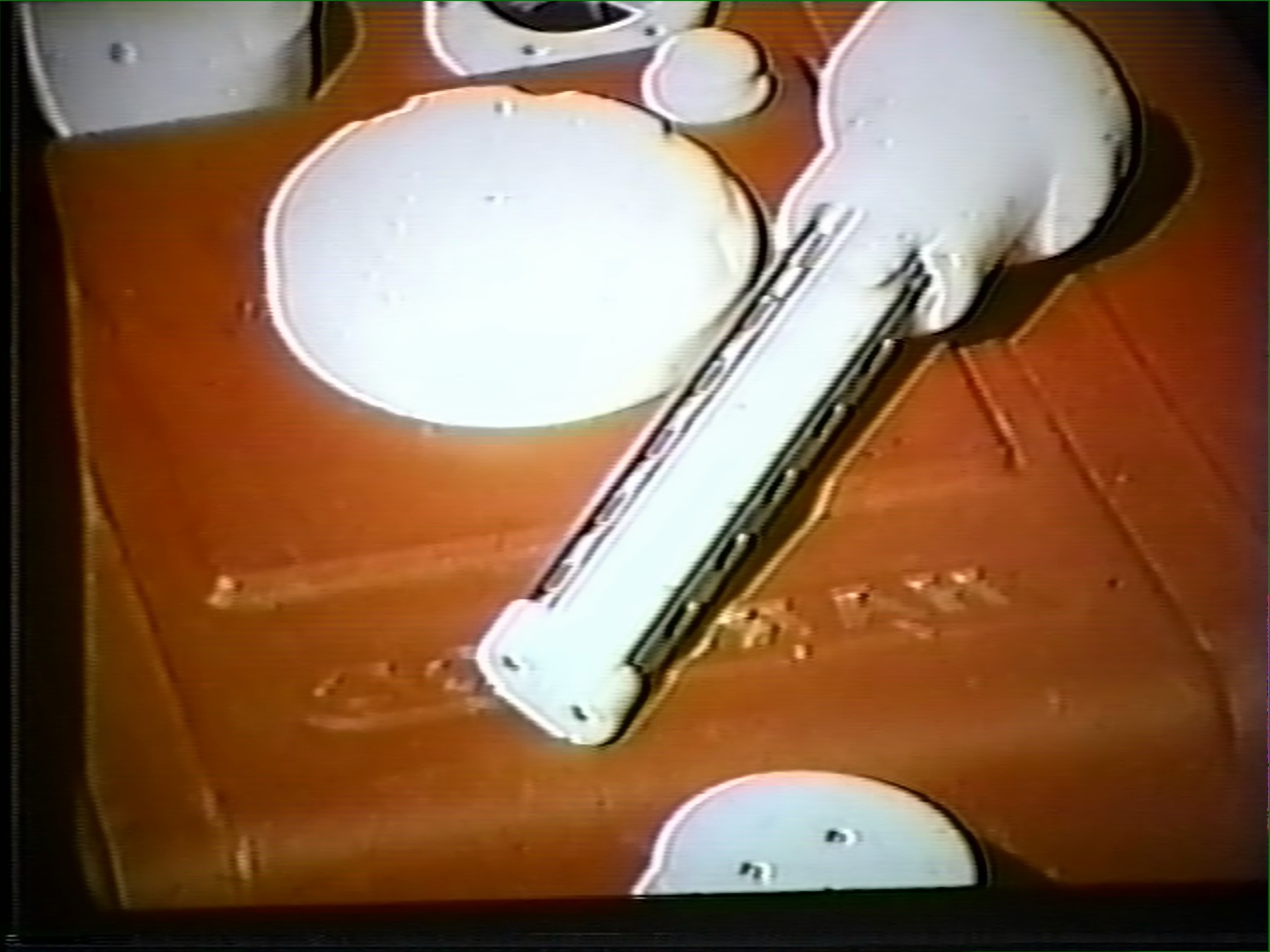
Steam resonator2 The buggy's steam resonator module, from the estate film.
-
Document
The Meyer estate, reel 1, transcribed 0:01 — 'the original home heating unit that Stan was working on prior to his death'.
-
Document
Steam Resonator - 3D printable replication The printable assembly and its STLs.
-
Document
Steam Resonator - Dimensional Diagrams One drawing per part.
-
Document
Steam Resonator (Memo WFC 423-DA) Ethan Crowder's PCB for the 423DA drive, winding ratios unknown.
-
Document
VIC coil readings Every winding of an estate VIC, measured on an LCR meter.
-
Calculation
Steam resonator: how fast, and by what, the water heats The calculation, with the numbers read in this film as its defaults.
-
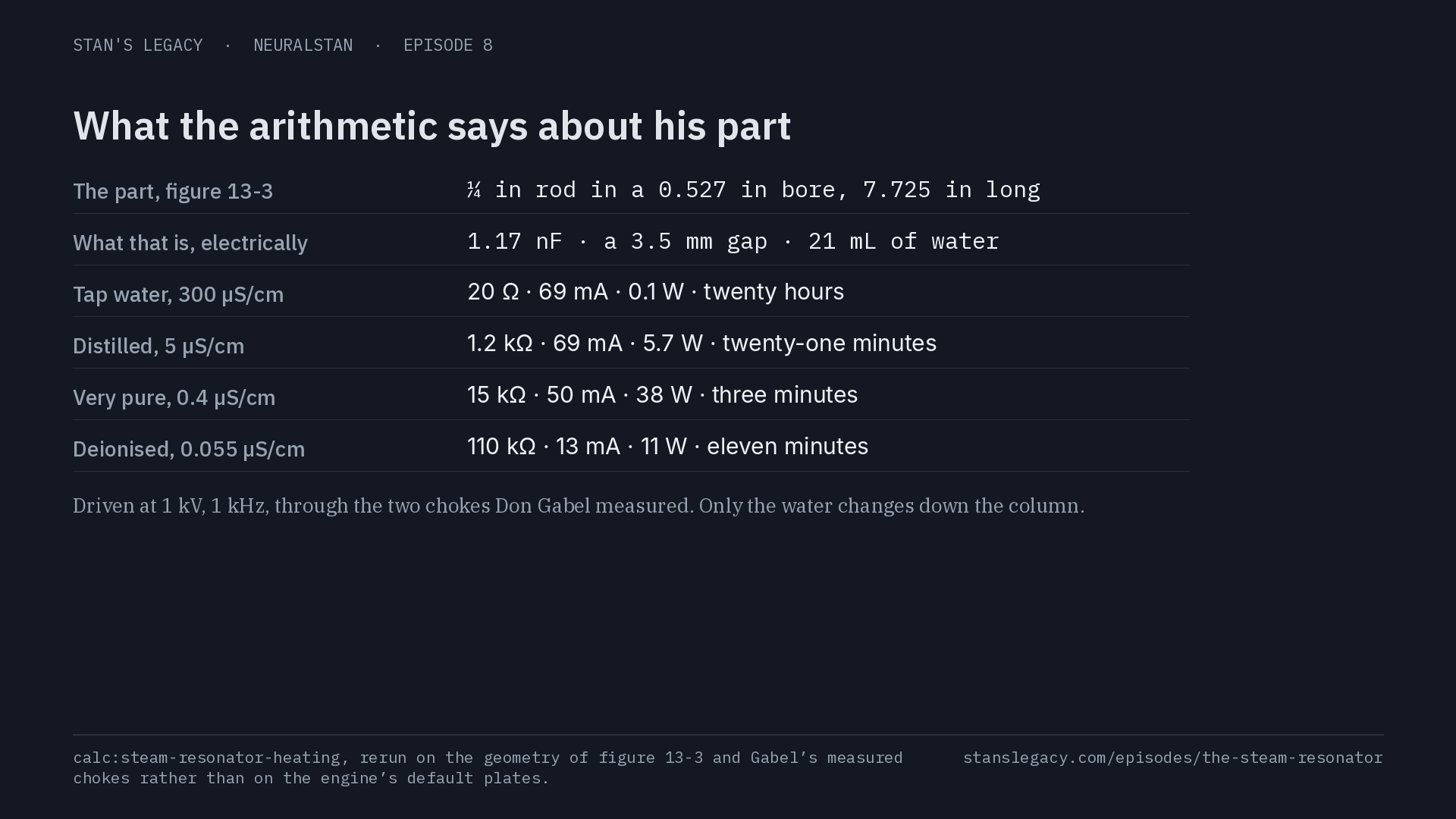
What the archive's own arithmetic says The worked example on one card.
This is not a round table. Nobody sat at it. It is a film the archive made from what it holds on one device, the steam resonator, with the memos on screen and the words read aloud.
About the voice. Where you hear Stan Meyer in this film, you are hearing a synthetic voice built by a machine from thirty seconds of his voice on the Deer Creek conference tape of 1985, the same reference StanBot speaks with. It reads only sentences he wrote or said, each cited below, with one exception: the sign-off at the end of the film is written for the film and is not a quotation. Where a quotation from a memo would have him reading out figure reference numbers, those numbers are left out; the source pages carry them. The narrator is a stock voice and nobody in particular. Treat both as a reading, not a recording.
What it is
The steam resonator is Meyer's answer to the question he was asked at every showing of the buggy: what happens when the water freezes? In the 1993 Southampton paper it is one of four things labelled on the drawing of the dune buggy, beside the water tank. At Denver in 1997 (48:02) he described it as putting a pulsed electrical charge across the water molecule, stretching it and releasing it like a rubber band, and heating the water with the energy released. He said much the same at Colorado Springs in 1991 (42:58), in the 1992 interview (about 12:40), and at the Global Sciences Congress (37:39 and 39:10). The estate still holds the last one he built: on reel one of the estate film it is the first thing the camera is pointed at, "the original home heating unit that Stan was working on prior to his death."
The device itself is two stainless steel plates in a bath of natural water. The fullest technical description is the Steam Resonator chapter of the extended dealership manual, which carries figure 2, Electrical Polarization of the Water Molecule (1981); figure 32, Utilizing Voltage Potential to Produce Superheated Steam on Demand (1983); and figure 32QX, the Steam Resonator Schematic. Figure 3-46 of memo WFC 422DA is the same device on one page, and memo WFC 430 is the later design, with one coil assembly and a crossover switch. The subsystem is Steam Resonator and the device record is Steam Resonator.
How it is driven
Figure 32QX: a variable DC supply and an alternate switching gate circuit with two outputs, H and J. Each output fires an optocoupler and a power transistor into the primary of its own voltage intensifier transformer; each secondary, wound in resistive wire, feeds a blocking diode, a resonant charging choke in resistive wire, and one excitor plate. So there is one VIC per plate, the gate circuit hands a unipolar positive pulse from one plate to the other, and the amp restriction is the wire. The manual puts the gate rate at up to one megahertz. Memo WFC 423DA draws it as a circuit to build, figure 4-13 of the Electronic Circuit Design chapter: a 4011 oscillator and a 4528 one-shot for the pulse rate, delay and width, a 3900 pair as the toggle between Q and Q-bar, a 2N2222 and a TIP120 Darlington per side into back-to-back VIC coils with resonant charging chokes, and two wave-guides across the water gap, B+ then off on one while the other goes off then B−. The estate kept the same drive as a slide, filed as the electrical schematic for the steam resonator.
Memo WFC 430 reduces it to a single VIC coil assembly and an electrical crossover switch, T1 to T4, which reverses which pair of plates is positive and which negative on every trigger pulse, driving two cells in opposite senses. Its closing sentence is the claim in one line: "Oscillating the bipolar water molecule by way of opposite voltage fields without amp influxing to heat water on demand, hereby, defines the Mode of Operability of the WFC Steam Resonator."
Paul Butcher's page sets out all five firing sequences the memos draw, and finds that the third, on page 11-5 of WFC 430, does not match the first two. He asks in print whether it is a mistake. It is not, and his own table holds the answer. In that third sequence the left-hand pair of plates receives positive pulses only, handed from one plate to the other, while the right-hand pair receives negative pulses only, handed the same way. Each pair is driven single-sign. That is exactly what memo WFC 430 says the crossover switch does: it "singularly places either a Positive Voltage Potential (1014) across both Voltage Zones (E18/E14) and/or a Negative Voltage Potential across Voltage Zones (E17/E16)". Sequence 4 (WFC 427DA figure 1-2) is the same idea applied to one pair, and sequence 5 is the spherical heater of the sales manual. So sequences 3, 4 and 5 are one design, not three. That third sequence is easily read as positive-only throughout, missing the negative half; the corrective is Butcher's own page, read across both columns.
The plainest statement of the mechanism is in the Spin Off Technology chapter of the sales manual (bookstack 134): "Since like charges repel and cause motion, the accelerated electrically charged molecule (b+ only) collides with the other water molecules, producing heat which is absorbed by the surrounding water." The same chapter gives the application: "Linked with the EPG systems ... or with the pulse voltage frequency generators ... the steam resonator (Figure 32) can be directly retrofitted to any power plant using steam as power." Meyer's mechanism is collision, not field heating.
What the molecule is said to do
The water molecule is polar: the hydrogen end slightly positive, the oxygen end slightly negative. Meyer's word is bipolar. Pulse one plate positive and the oxygen end is drawn toward it while the hydrogen end is pushed away; pulse the other plate instead and the molecule swings back. Do it at a rate and, the manual says, the molecules collide and the water heats, to superheated steam if the amplitude is raised. The one line printed in capitals is the boundary with the fuel cell: "DO NOT SIMULTANEOUSLY APPLY AN OPPOSITE ELECTRICAL VOLTAGE FIELD ACROSS SAID WATER MOLECULE UNLESS YOU WANT TO PRODUCE HYDROGEN GAS ON DEMAND." Same plates, same water, same VIC; alternate same-sign pulses are the heater, opposite signs at once are the electrical polarization process.
The hardware
Chapter 13 of memo WFC 423DA draws it as a part: a retaining cap with two terminals, a mount base, an excitor tube assembly on an insulation block, and an end cap. Figure 13-3 dimensions the metal: the inner excitor rod is quarter-inch T304 stainless, 7.725 inches exposed and 8.745 overall, threaded 8-32 and 6-32 with an O-ring groove .091 wide; the outer tube is .625 diameter with a .049 wall, so a bore of .527, and seven slots a side .1094 wide by .530 long at 120 degrees. Subtracting the rod from the bore and halving it gives a water gap of .1385 inch, 3.5 mm, uniform all the way round, and that figure fixes the electrical numbers below. Figure 13-1 mounts two of these assemblies side by side either side of the insulation block: they are cells 1030A and 1030B of WFC 430's crossover drawing, so the machined part and the switching circuit are one machine described in two memos. Chapter 4 of the same memo carries the other half a builder needs and nobody reproduces: figure 4-17, the water heat logic circuit, an LM111 comparing a water probe (figure 4-22) against a setpoint, with a −50 °F to 300 °F band, an upper-limit safety reset, a pop-off switch and a half-amp fuse, whose outputs F and G feed the pulse generator and the VIC primaries of figure 4-13. The estate photograph Steam resonator2 is a still from the estate film of the buggy's steam resonator module, its moulded parts and the slotted tube on the bench; the home heating unit itself, a bigger build on its own stand, is the first thing on reel one. Members have since produced a 3D printable replication, dimensional diagrams for each part, and a through-hole PCB for the drive, whose author notes that the winding ratios are not given in the memo.
What the arithmetic says
It is tempting to put the engine's default geometry into the steam resonator calculation: 100 cm² flat plates 3 mm apart, 1000 V, distilled water, boiling in about six seconds. That is an honest calculation of the wrong device. Meyer dimensioned his own in figure 13-3, so those are the numbers used here.
A ¼ in rod inside a .527 in bore over 7.725 in is 1.17 nF holding 21 mL of water in a 3.5 mm annulus; taking that to the boil needs 7,166 J. The drive is not a stiff supply and was never meant to be: the secondary and both chokes are resistive wire, and Don Gabel's 2009 measurements of an estate VIC (VIC coil readings) put each choke at about 1.2 H on the core, which is 14.5 kΩ of reactance in series with the water at 1 kHz. The current, not the voltage, is what is limited. At 1 kV through those chokes, changing only the water:
| Water | Cell | Current | Into the water | To the boil |
|---|---|---|---|---|
| tap, 300 µS/cm | 20 Ω | 69 mA | 0.10 W | 21 hours |
| distilled, 5 µS/cm | 1.2 kΩ | 69 mA | 5.7 W | 21 minutes |
| very pure, 0.42 µS/cm | 15 kΩ | 50 mA | 38 W | 3 minutes |
| deionised, 0.055 µS/cm | 110 kΩ | 13 mA | 11 W | 11 minutes |
The column inverts the intuition. In a current-restricted circuit cleaner water heats faster, and there is an optimum, where the cell's resistance matches the chokes' reactance. It falls at about 0.4 µS/cm, which is good distilled water: the water Meyer insisted on for twenty years without ever writing down why.
The engine's other finding stands unchanged: at these frequencies the dipoles' own rotation contributes about 0.000006 % of the heating, and the heat is carried by current. But that was never the disagreement. Meyer's stated mechanism is collision and "particle impact", and a collision between charged molecules is carried by current. The open question is whether the heat out exceeds the I²R in, and it is a bench measurement, not an argument: a current probe on the plate lead, a thermocouple in the annulus, water of a measured conductivity, and five minutes of logging. Integrate I²R and compare it with mcΔT.
Sources
Everything put on screen is listed under What was shown, in the order it came up, and each of those records links back here. The transcript beside the recording is the script the voices read, with the clock on every line.
steam resonator WFC 430 WFC 422DA WFC 423DA dealership manual synthetic voice