(45)
Enters Chamber
Also written maximum
Where it is first named
(a) (A) No. 1 233 379 (45) ISSUED 880301 (52) CLASS 123-15 C.R. CL. 60-14 (51) INT. CL. FO2M 21/04as) can CANADIAN PATENT «2 (54) Hydrogen Gas Injector for Internal Combustion Engine (72) Meyer, Stanley A., U.S.A. (21) APPLICATION No. 420,910 (22) FILED B30204 (30) PRIORITY DATE U.S.A. (349,185) 820217 No. OF CLAIMS 18
How it is written
- (45) 1×
- (enters chamber 45) 1×
- (maximum 45) 1×
Drawings 3
-
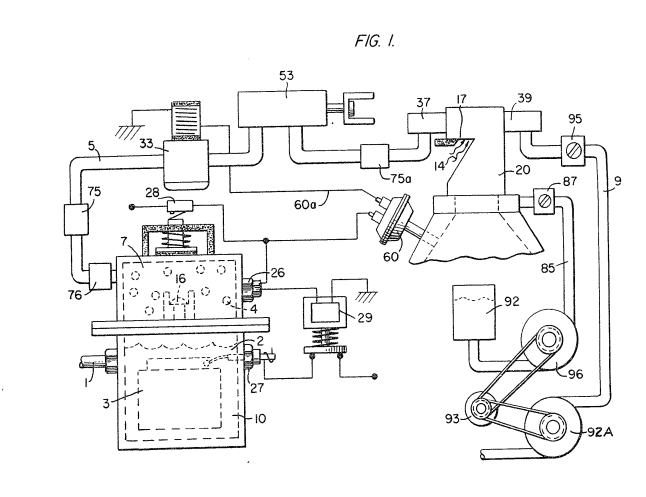
The flow of the hydrogen gas is, of course, critical, therefore, there is incorporated in line 5 a gas flow valve 53 (Figure 1) to adjust the hydrogen flow. · Hydrogen Gas Injection for Internal Combustion Engine
-
Carries this number · Hydrogen Gas Injection for Internal Combustion Engine
-
Carries this number · Hydrogen Gas Injection for Internal Combustion Engine
Where it is named · 3
Hydrogen Gas Injection for Internal Combustion Engine 3×
-
(a) (A) No. 1 233 379 (45) ISSUED 880301 (52) CLASS 123-15 C.R. CL. 60-14 (51) INT. CL. FO2M 21/04as) can CANADIAN PATENT «2 (54) Hydrogen Gas Injector for Internal Combustion Engine (72) Meyer, Stanley A., U.S.A. (21) APPLICATION No. 420,910 (22) FILED B30204 (30) PRIORITY DATE U.S.A. (349,185) 820217 No. OF CLAIMS 18
-
enters chamber (enters chamber 45)
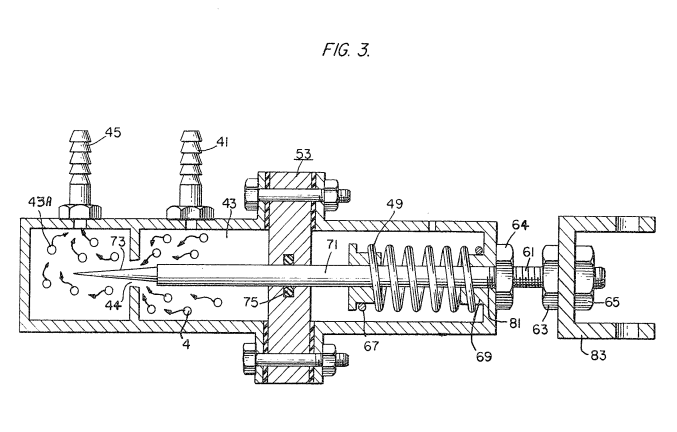
Reference is made to Figure 3 illustrating precisely in a side view cross-section the fine linear fuel flow control 53. The hydrogen gas 4 enters chamber 45 via gas inlet 41. The hydrogen gas passes from chamber 43 via port or opening 44. The amount of gas passing from chamber 43 to chamber 43A is controlled by controlling the port opening 44.
-
maximum (maximum 45)
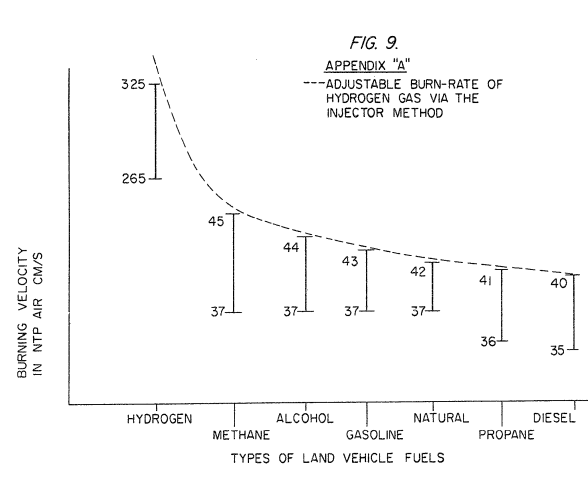
With reference to the graph of Figure 9, it is seen that the burning velocities of alcohol, propane, methane, gasoline, natural gas, and diesel oil are in the range of minimum 35 to maximum 45. Further, the graph illustrates that the burning velocity of hydrogen gas is in the range of 265 minimum to 325 maximum. In simple terms, in the order of 715 times the velocity of ordinary commercial fuels. .