(18) · also written as a run, 18a xxx 18n
Pulsating Magnetic Field
Also written magnetic field · magnetic pulsing action · horizontal deflection · magnetic wave-forms
Where it is first named
Pulsing said Orientation-coils slowly causes a horizontal deflection (18a xxx 18n of Figure 26A) of said magnetic field (4/11).
How it is written
- (17/18) 3× with (17) Pulsating Magnetic Field
- (17a xxx 17n and/or 18a xxx 18n) 1× with (17) Pulsating Magnetic Field
- (18a xxx 18n of Figure 26A) 1×
- (4/11 as to 17/18) 1×
18a xxx 18n is Meyer's shorthand for a run of the same thing: 18a is the first, 18n the last, and the x's stand for however many lie between. Every stage of the run is this one numeral. A pair before the letters, 583/602a, is a run of two things that go together, one of each per stage.
Drawings 3
-
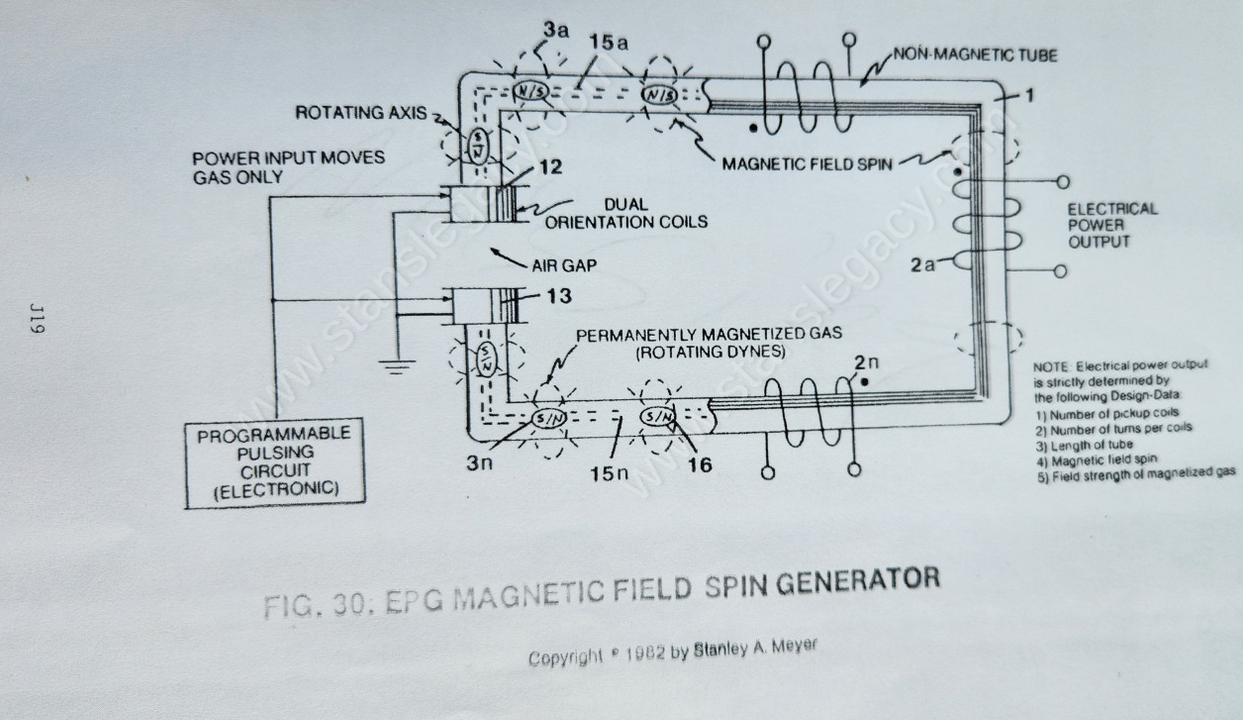
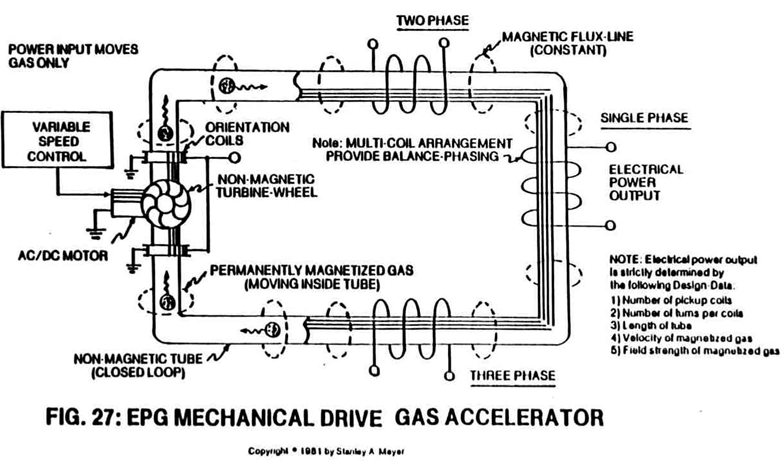
Pulse-frequency electrical output (23 of Figure 30 as to Figure 27) is strictly determined by the pulse-rate of said orientation coils (12/13). · ELECTRICAL PARTICLE GENERATOR
-
The figure it sits on · ELECTRICAL PARTICLE GENERATOR
-
Beside the passage · ELECTRICAL PARTICLE GENERATOR
Where it is named · 6
ELECTRICAL PARTICLE GENERATOR 6×
-
horizontal deflection (18a xxx 18n of Figure 26A)
Pulsing said Orientation-coils slowly causes a horizontal deflection (18a xxx 18n of Figure 26A) of said magnetic field (4/11).
-
magnetic wave-forms (17a xxx 17n and/or 18a xxx 18n)
In both cases, said reforming magnetic wave-forms (17a xxx 17n and/or 18a xxx 18n) are oscillating inside said coil-array (2a xxx 2n)... producing electrical energy.
-
magnetic field (4/11 as to 17/18)
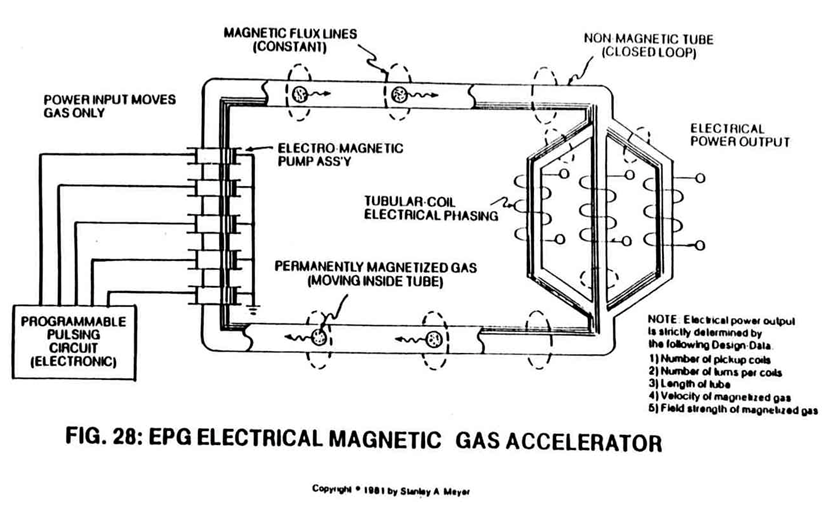
The magnetic pulsing process simply spins the dyne-axis of said particles (3a xxx 3n) to oscillate and attenuate a permanent magnetic field (4/11 as to 17/18), as illustrated in Figure 30 as to Figure 26 through Figure 33.
-
magnetic pulsing action (17/18)
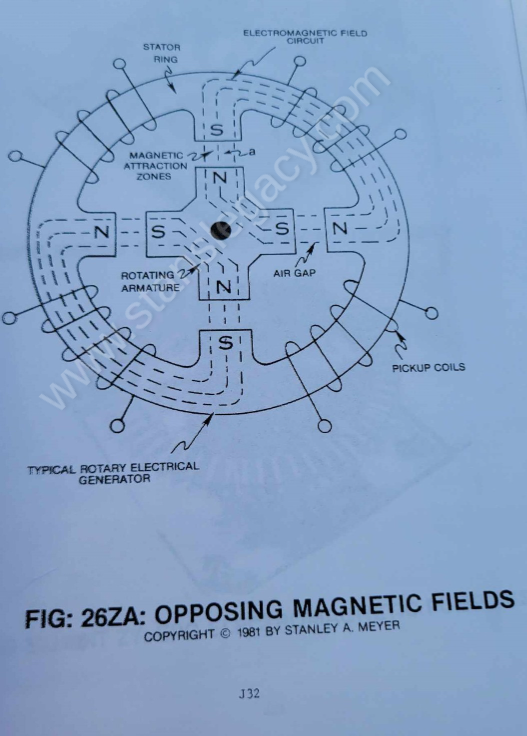
The magnetic pulsing action (17/18) duplicates the magnetic-pulsing action of Figure 26ZA without "the opposing magnetic field problem" (caused by said Air Gap) associated with standard rotary electrical generators, see "Pre-History to Development" once again.